Our steel firewall fencing is built from high-tensile, metallic-coated and pre-painted steel. It gives you a full-privacy fence that is non-combustible as a material property — not rated slow-to-burn, but incapable of burning.
That is what makes steel the right answer for the five feet closest to the house, where California’s Zone 0 rules apply and a flame-spread rating alone is not enough.
Steel is a metal. There is no ignition temperature to reach, no fuel to contribute and no flame to spread along its surface. It needs no fire test to establish that, in the same way water needs no test to establish that it is wet.
This is the distinction that matters when a plan reviewer or an insurer looks at your drawing. Class A rated materials describe how slowly flame spreads across a surface. Non-combustible materials do not burn at all — and California’s Zone 0 rules for the first five feet around a structure are written around non-combustibility, not flame-spread class.
Where a fire actually starts
Your fence is the first thing the fire touches
Most homes lost in a wildfire are not lost to a wall of flame arriving from the canyon. They are lost to embers — carried a mile or more ahead of the front, landing in whatever will hold them.
A fence is a continuous line of material running straight up to the house. If that line is timber, or a composite, or vinyl, the embers have somewhere to settle and something to feed on. The fence stops being a boundary and becomes a fuse.
If that line is steel, the embers land, glow, and go out. Nothing carries. That is the entire proposition on this page, and everything below is the evidence for it.
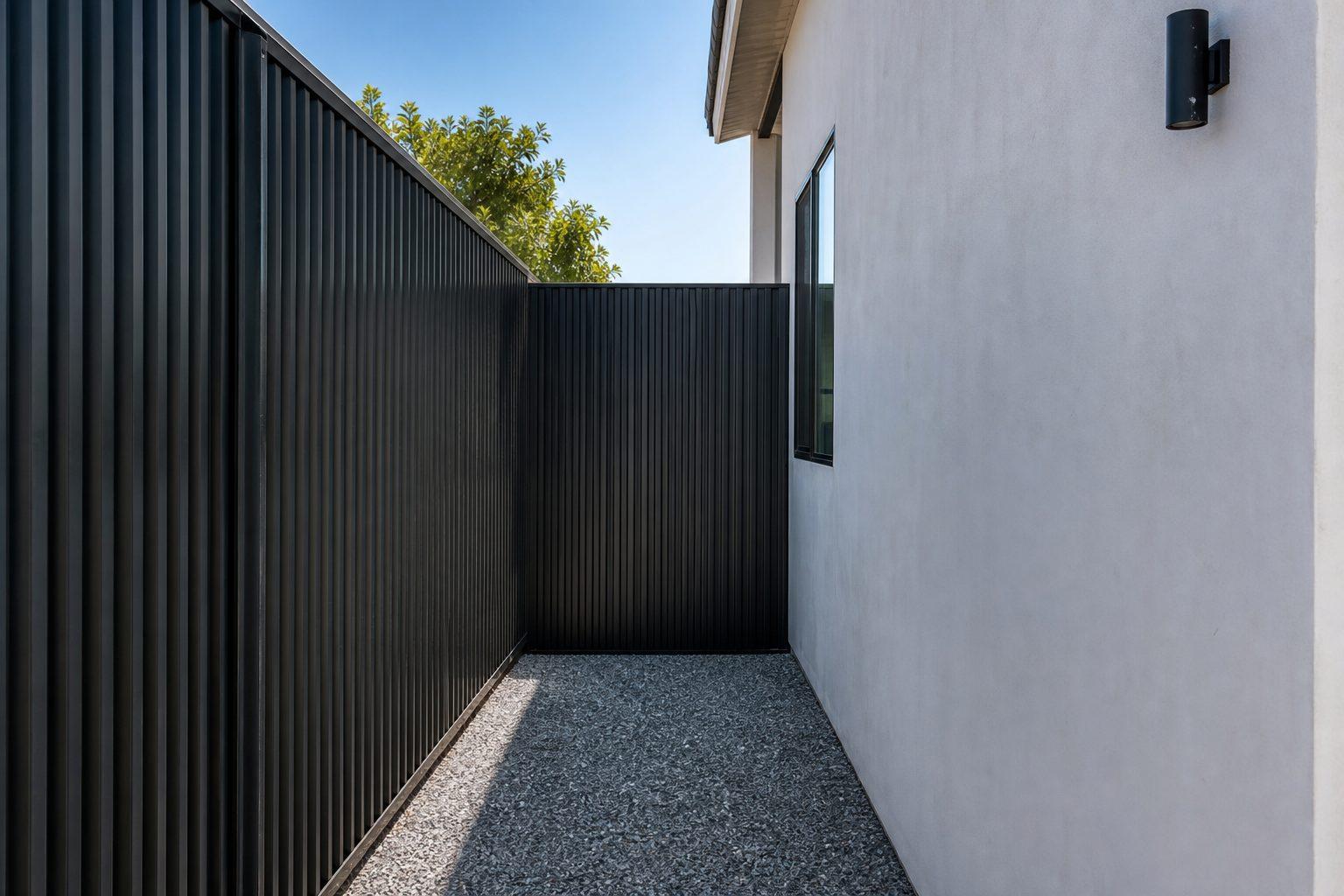
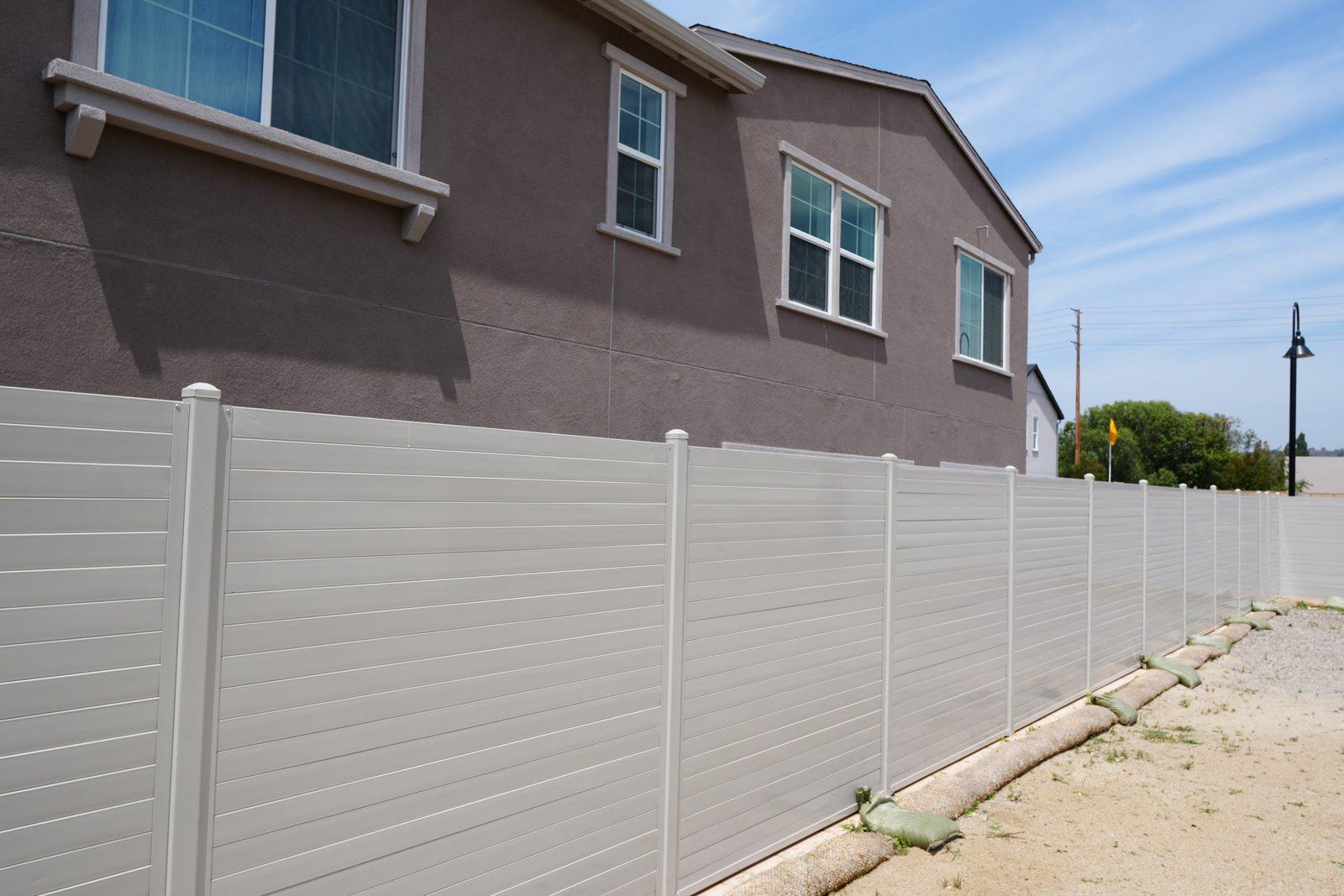
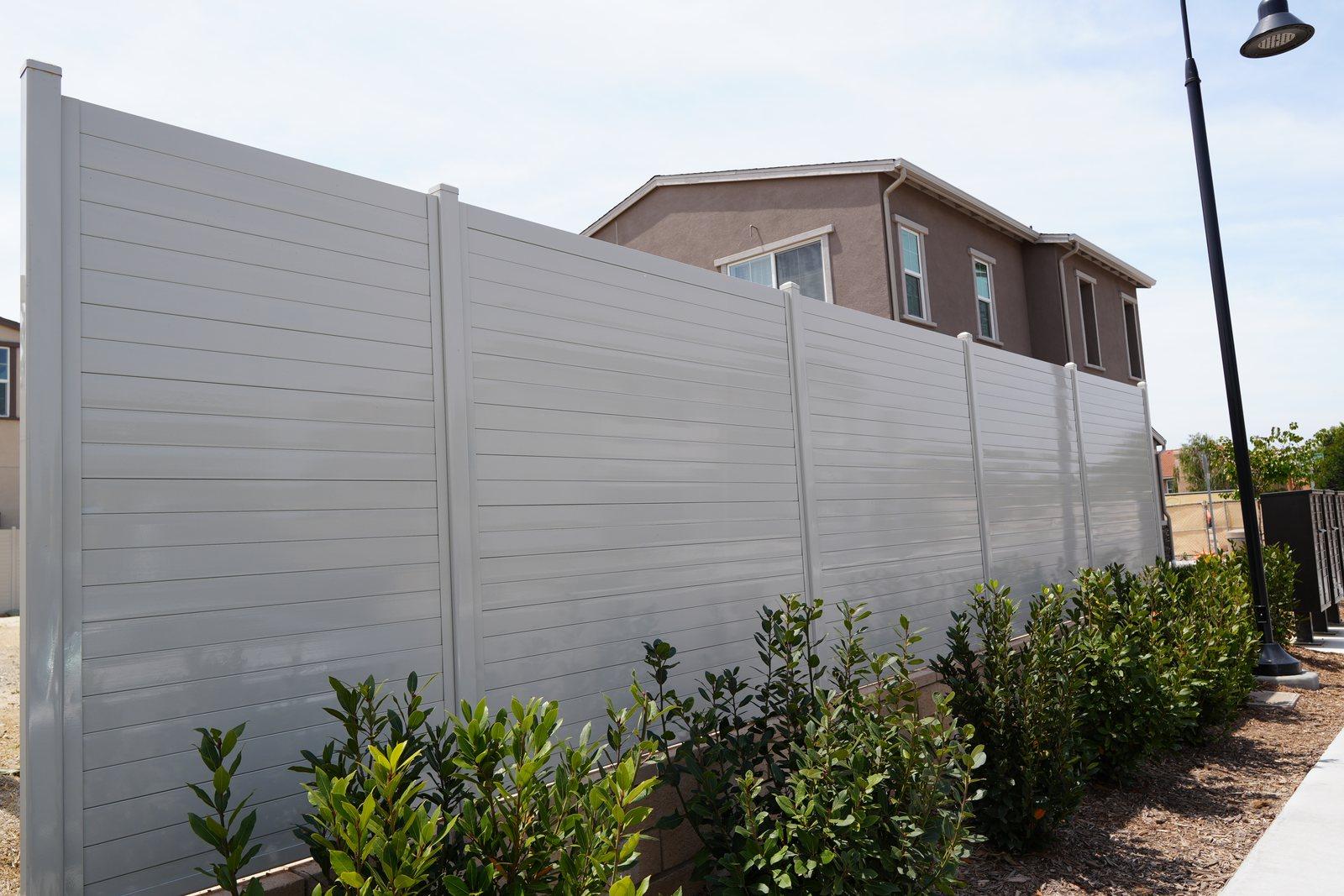
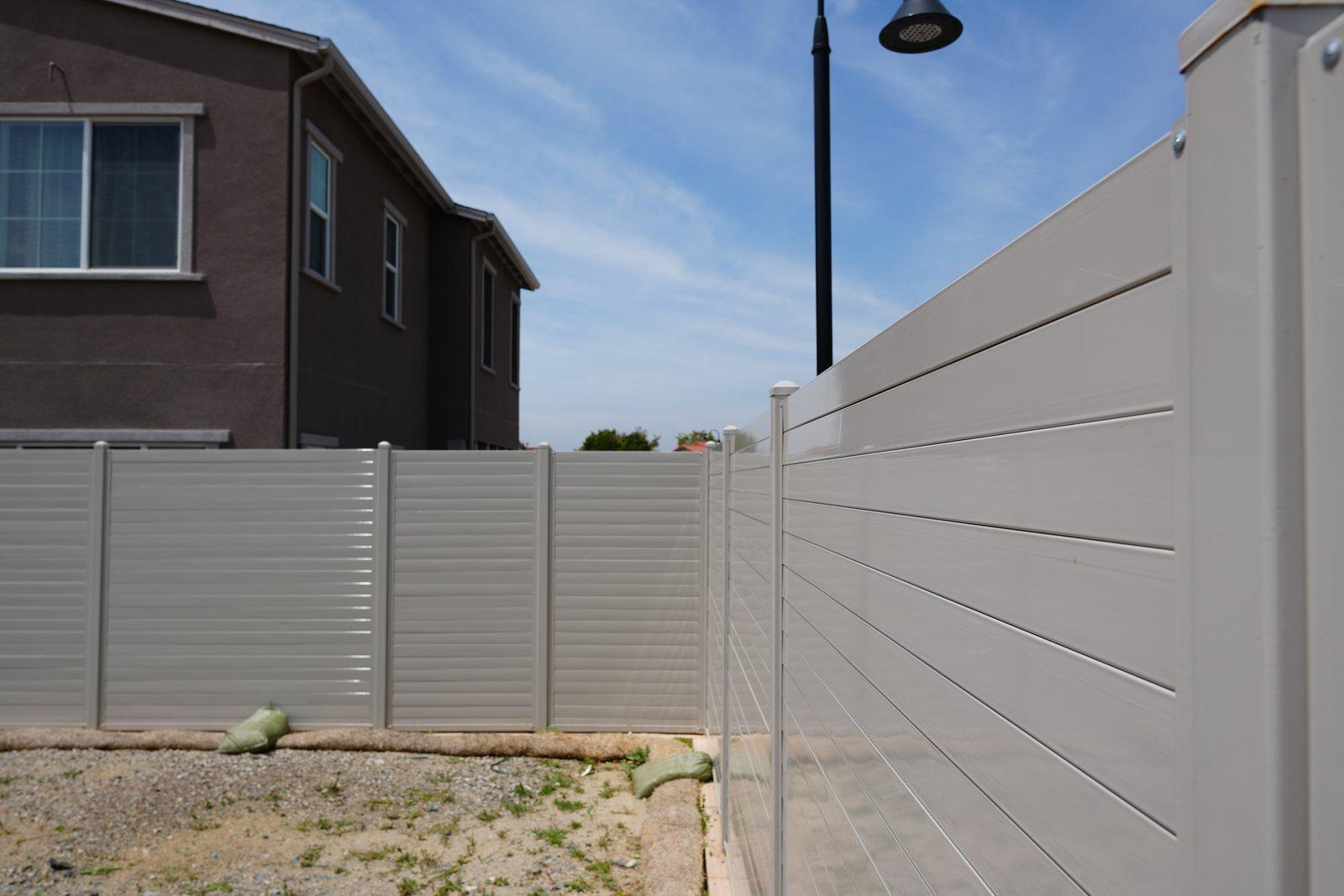
The first five feet: steel fence, gravel, and nothing in between that will carry a flame.
The research
What the fire scientists found
The evidence for steel is not ours. It comes from the Bushfire Co-operative Research Centre and CSIRO, Australia’s national science agency, who built full fence assemblies out of competing materials and burned them under controlled exposures.
“A steel fence offers greater protection to people’s homes against bushfire than other alternative materials because of its non-combustibility.”
“Of the different materials tested, pre-painted and metallic coated sheet steel performed best under all exposure conditions.”
Bushfire CRC / CSIRO
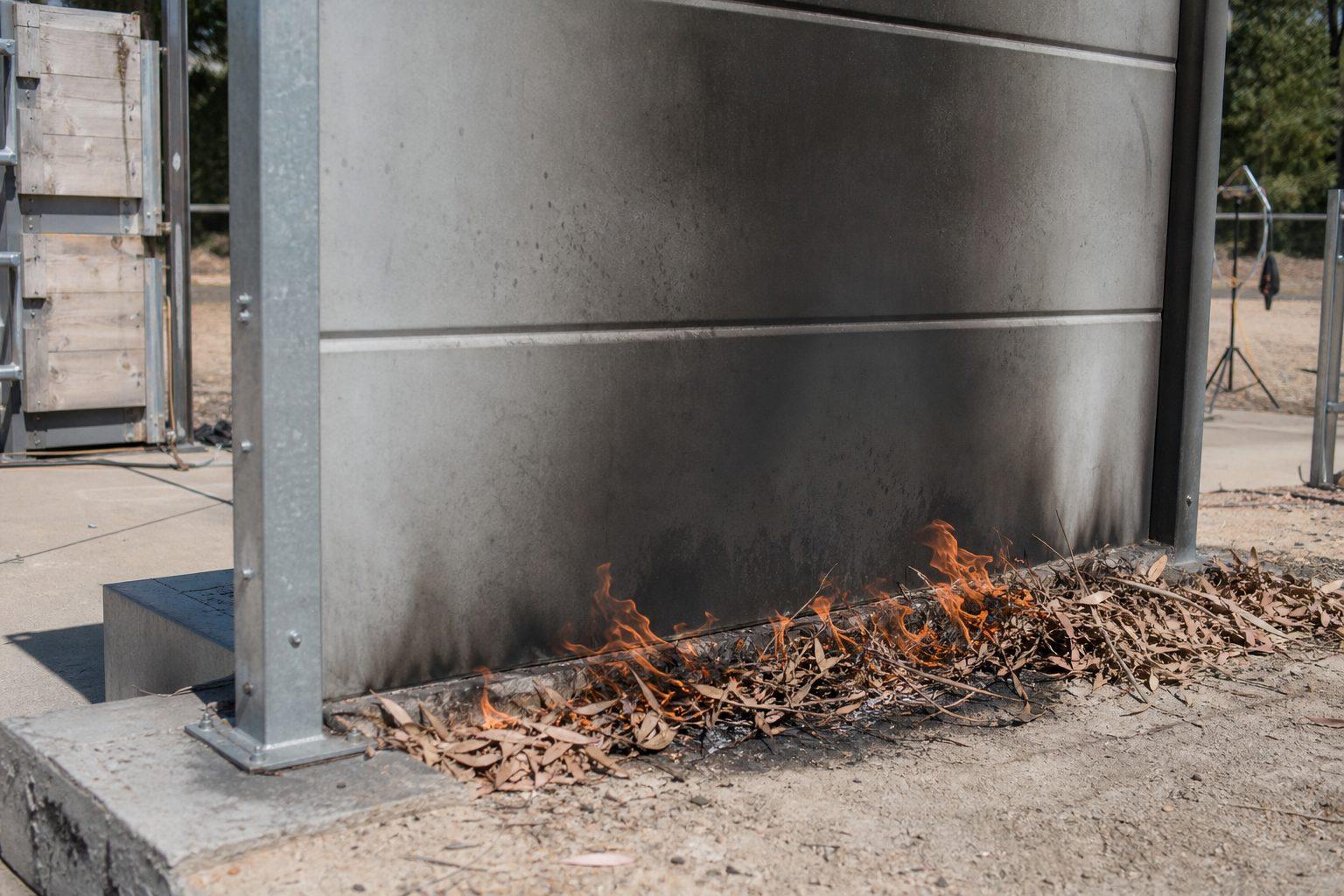
Illustration of the litter-bed exposure: leaf litter piled against the panel and lit. The steel sooted, and held.
Litter ignited
Leaf litter piled on rails and around posts, then lit. No structural failure.
Litter + pre-radiation
The radiant heat of an advancing front, without direct flame contact. No structural failure.
Direct flame contact
The most severe exposure in the programme. No structural failure.
Colorbond is specified in Australia’s most severe bushfire classification, BAL-FZ (Flame Zone) under AS 3959:2018.
The morning after
What you want to be looking at
A fence that is still standing, still straight, and still doing its job — with the burn stopped on the far side of it. Sooty steel washes down. A burned fence line takes the yard, the deck, and often the house with it.
What we supply
Why we build with Colorbond® steel
Our steel category is built around Colorbond® steel — a metallic-coated, pre-painted steel developed in Australia, where fencing has been engineered against bushfire for decades rather than years.
That matters because Australia has building standards written specifically for fence assemblies in fire country, and Colorbond has been tested against them. Very little domestic fencing steel carries that depth of published fire research behind it.
The panels give complete privacy with no gaps, in a range of colors that hold up under UV without the chalking you get from cheaper coil coatings.
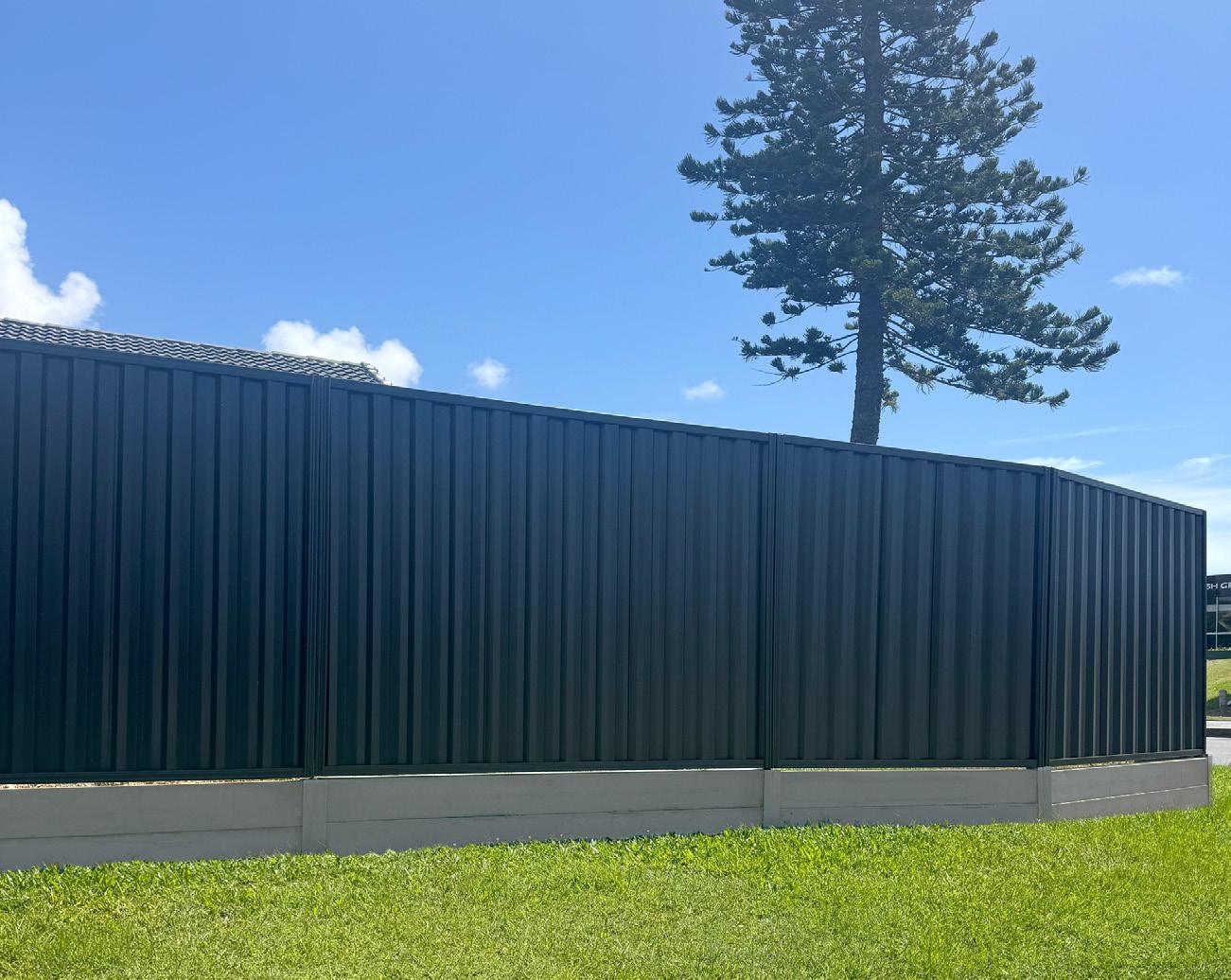
Colorbond® steel in a dark ribbed profile — full-privacy sheet, no pickets, no gaps.
Installed
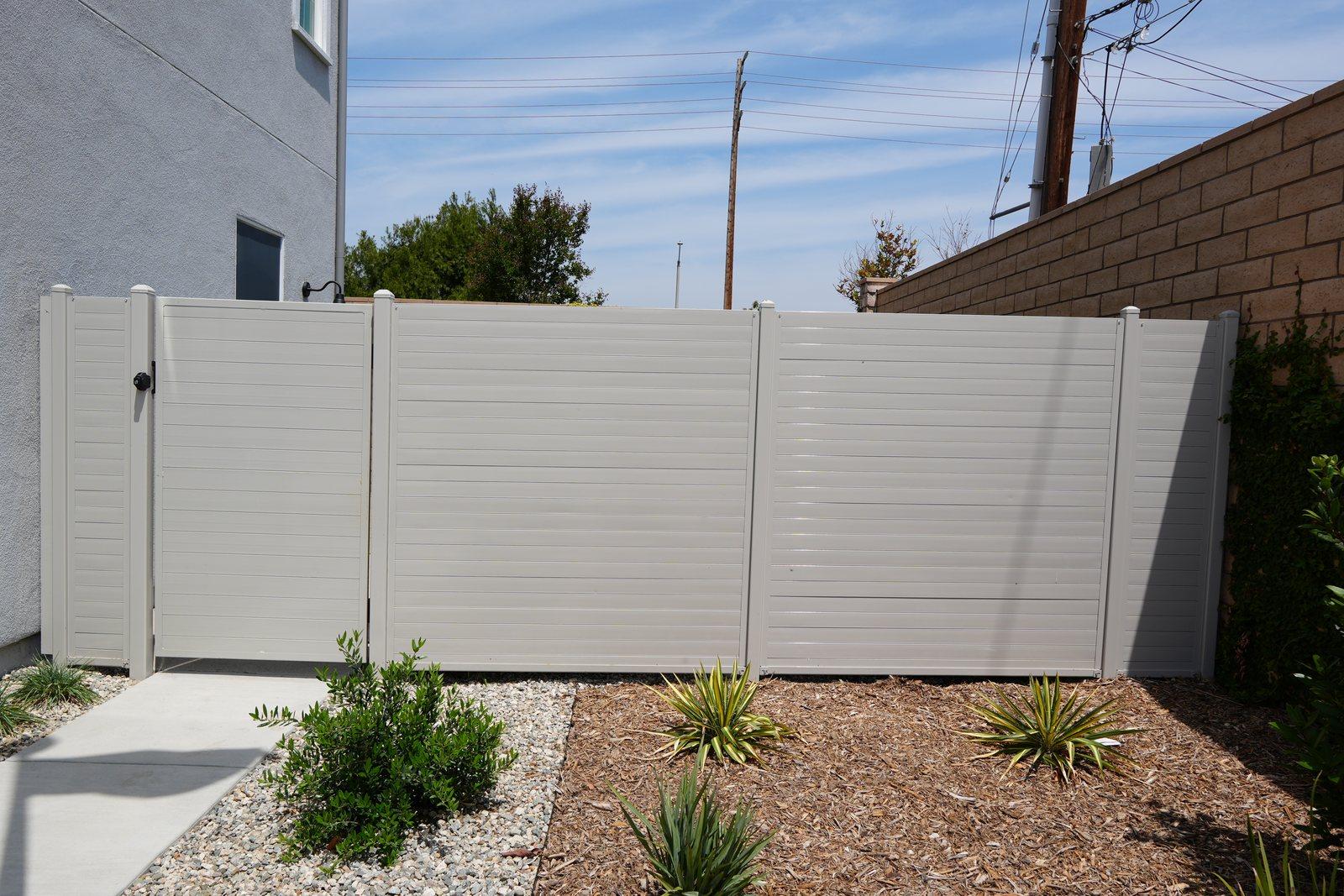
Steel privacy fencing in Santa Paula
A Fence Specialties installation, photographed on site.
Panels and a matching gate on the same profile, so the run reads continuously.Full height alongside the home — no pickets, no sightlines.Low planting kept back off the fence line.The gate leaf, braced and finished to match the panels.
Where this sits in California code
Non-combustible is the strongest thing a fence can be
California’s Zone 0 is written around non-combustibility, and steel is non-combustible. That is a property of the metal itself, not a rating anyone issues — so it needs no certificate, it cannot expire, lapse or be revised, and it satisfies the requirement on its own terms. It is a stronger position than a flame-spread class, not a weaker one.
It is worth knowing that California’s WUI Listed Products Handbook contains no fencing category at all. No fence, from any supplier, in any material, holds a ‘Class A fence’ listing in this state — so if you are shown one, it is worth a closer look. If a specification asks for one, send it to us and we will help you get the wording right before it reaches a plan reviewer.
The Bushfire CRC and CSIRO research above is additional evidence on top of that. Australia writes standards specifically for fence assemblies in bushfire country and tests to AS 1530.1 and AS 3959 — depth of fence-specific fire research that very little fencing material anywhere can claim. It tells you how this steel behaves in a real fire; non-combustibility is what answers the code here. The two work together.
Why this steel
Beyond the fire question
Durability
Metallic coating under baked-on paint. Built for decades of UV, not a few seasons.
Wind performance
Engineered panel and post spans, rated for real wind loads rather than assumed ones.
Color range
A designed palette that holds color, instead of fading to a chalky version of itself.
Zero gaps
Full-privacy sheet panels — no pickets, no sightlines, nothing for embers to lodge in.
No fuel added
Nothing on the fence line contributes to fire load. That is the whole point.
Low upkeep
No staining, sealing or replacing boards. Wash it if it gets dusty.
The paperwork
The documents you’ll be asked for
If a plan reviewer, an insurer or an HOA asks what this fence is made of, these are the documents that answer them. Send the link straight across — it is ours, so it will still open next year.
Brochure · Apr 2026
Colorbond® steel brochure
The full product brochure — construction, finishes and applications.
Specifying a run close to a structure? Send us the site plan. We will mark where the non-combustible requirement applies and what the assembly needs to be, before it reaches a plan checker.
Next step
Tell us how close the fence gets to the house
That single measurement usually decides the material. Send us the linear footage, the height and the setback, and we will come back with what qualifies and what it costs.