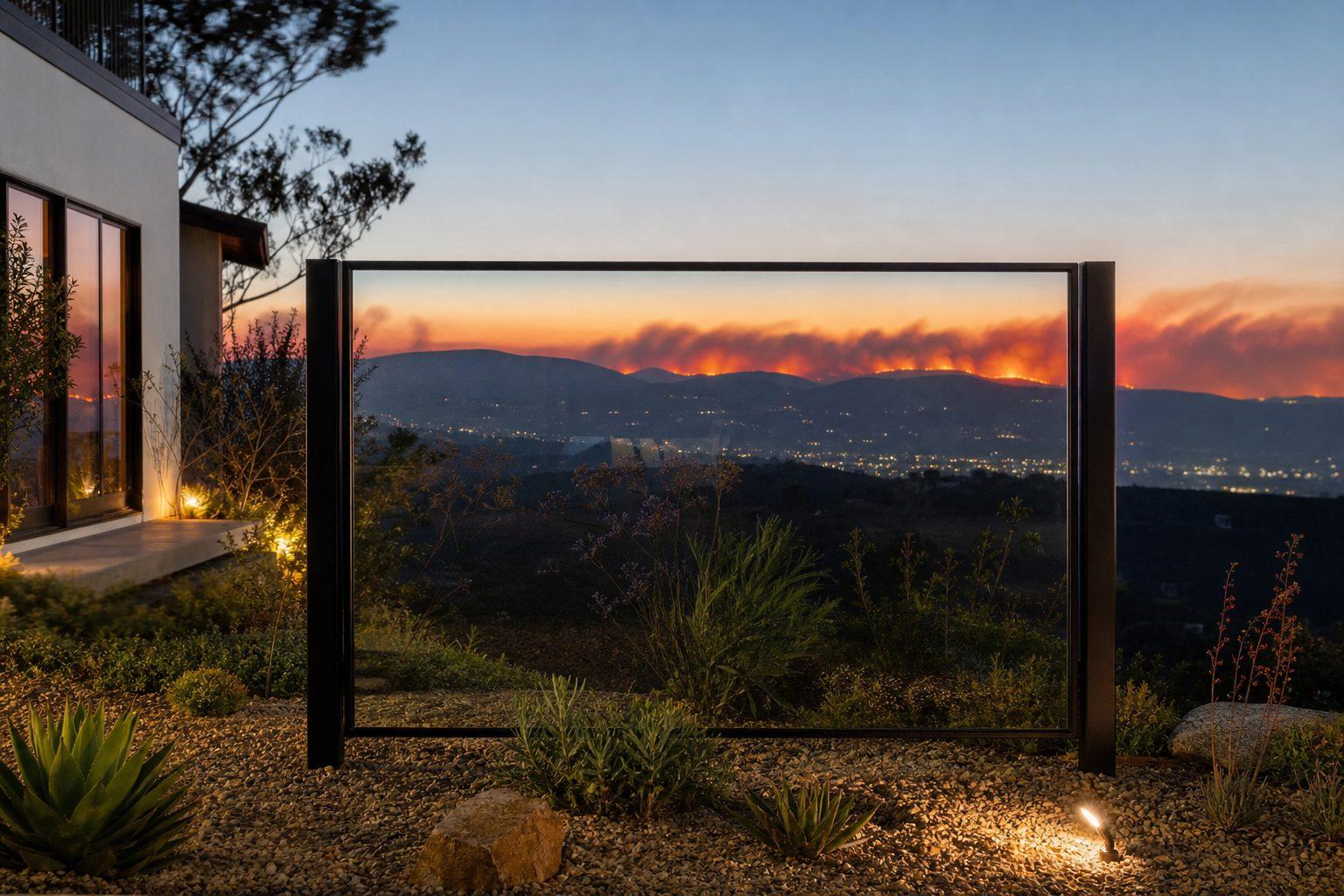
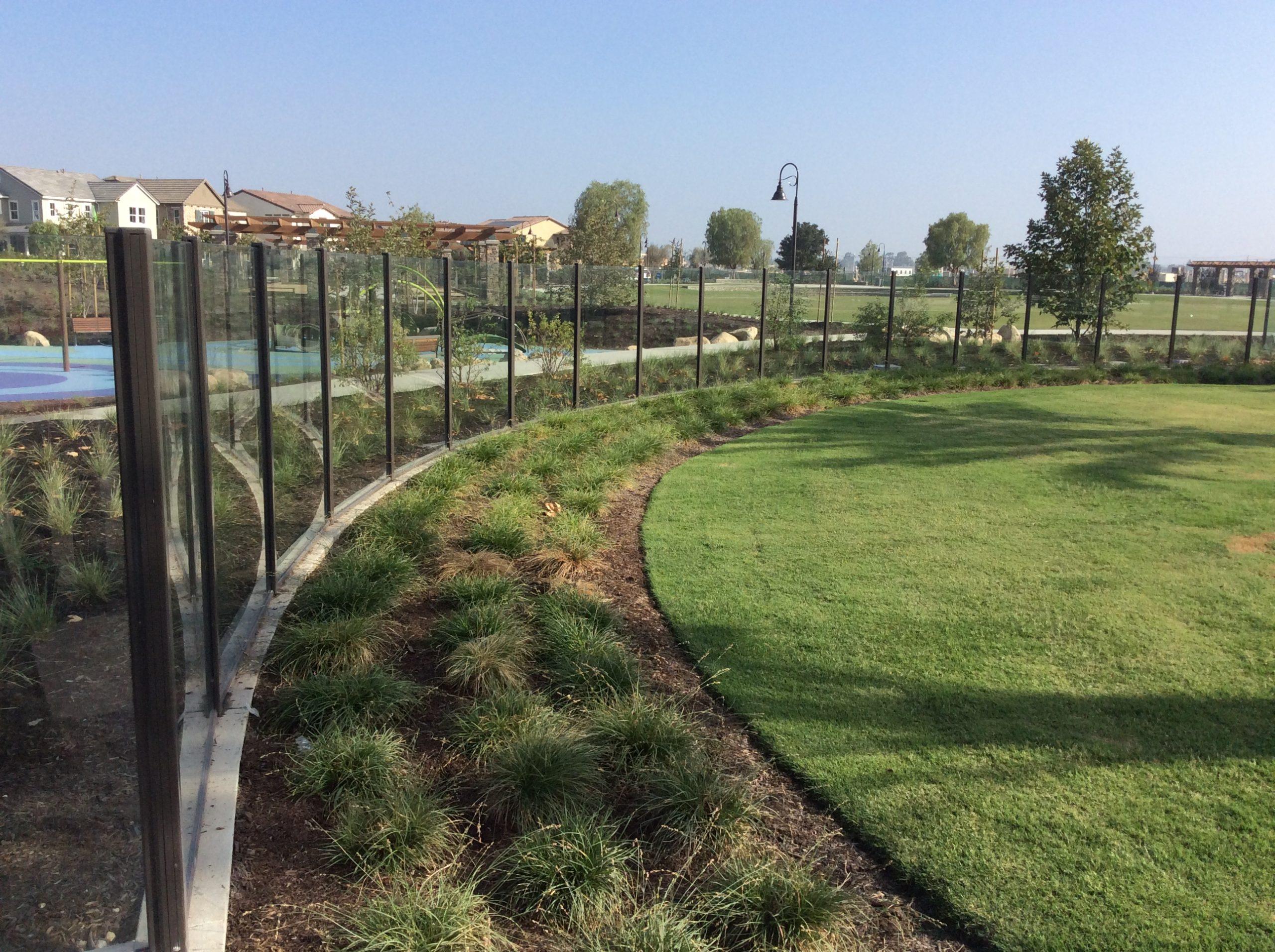
On a hillside or a view lot, the fence is often the thing standing between you and the reason you bought the property. Fire-rated glazing lets you hold a rated perimeter without giving up the view.
This is a specified, engineered product, not something off a shelf. The rating belongs to a tested assembly — glass, frame and fixings together — and it is established project by project.
On a ridgeline lot, a large part of what the property is worth is what you can see from it. A solid non-combustible fence protects the house and quietly deletes the reason the house is worth what it is.
Fire-rated glazing is the one material that refuses that trade. It holds a rated perimeter and stays invisible while doing it — which is why it is specified on the sites where the view is the whole point.
Illustration. The reason the glazing gets specified: the perimeter is rated and the view survives it.
Read this before you specify
Standard glass is not fire-rated glass
Tempered glass and laminated glass are not fire-rated, and neither should ever be described that way on a drawing or in a quote. They are safety glazing, which is a different thing solving a different problem.
Fire-rated glazing is a distinct category, manufactured differently and tested as a complete assembly to achieve a stated rating — typically 20, 45, 60 or 90 minutes under ASTM E119 or a UL procedure. Which rating you need depends on the application, the jurisdiction and the proximity to other structures.
We do not hold a blanket fire rating for ‘glass fencing’, and no honest supplier does. The rating is a property of the specific assembly on your specific project, so it gets confirmed with the glazing manufacturer against your drawings before anyone puts a number in a submittal.
How it is made
What makes glass fire-rated
Ceramic glass — a heat-resistant composition that holds its integrity under direct flame and severe temperature differentials. The most common choice for rated glazing.
Intumescent laminates — interlayers that react to heat by turning opaque and insulating, blocking radiant heat transfer as well as flame.
Specialty tempered products — used where a lower rating is sufficient and the assembly has been tested as a unit.
Which one is right depends on whether your requirement is integrity only, or integrity plus insulation against radiant heat. That distinction changes both the product and the price.
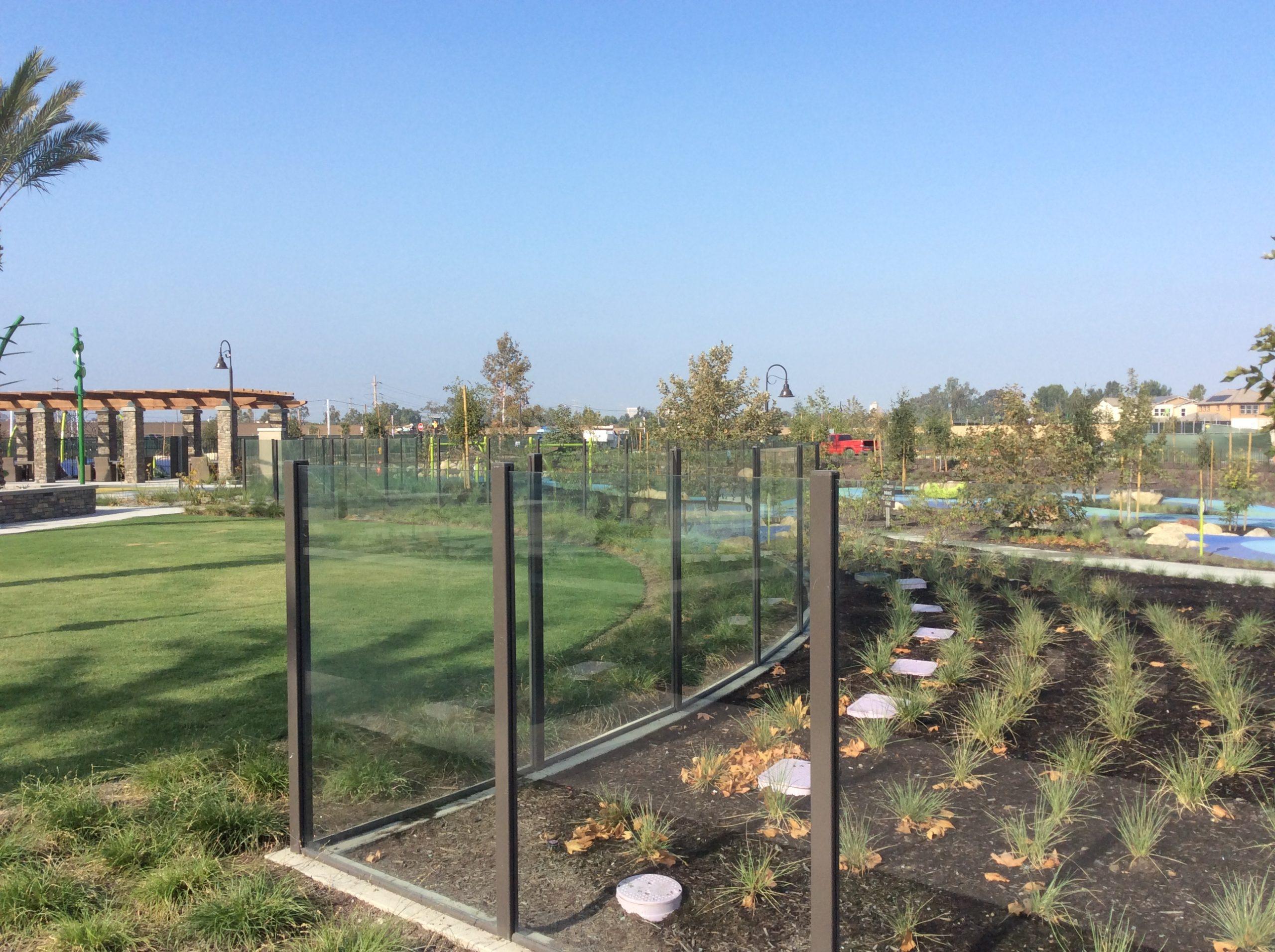
A curved run on a public project — glass follows a radius that solid panels cannot.
The distinction that drives the price
Integrity, or integrity plus insulation
This is the single most useful thing to understand before you ask anyone for a number, because the two answers can differ by several times on the same elevation.
Integrity only — E
Stops flame and smoke
The assembly holds together and keeps flame and smoke on one side. Radiant heat still passes through the glass, so something combustible close behind it can still be ignited by heat alone. Appropriate where nothing flammable sits near the glazing and the requirement is containment.
Integrity + insulation — EI
Stops flame, smoke and radiant heat
The assembly also limits heat transfer through the glazing, usually via an intumescent interlayer that turns opaque as it reacts. Required where the glazing is close to something that could ignite from radiant heat — including, sometimes, people. Costs significantly more.
If a plan reviewer has given you a rating in minutes but has not said which of these two it is, that is worth resolving before anyone prices it. We will ask you for it.
Configurations
Three ways it gets built
Framed panels
Glass captured in a perimeter frame. The most straightforward route to a rated assembly, and usually the most economical.
Semi-frameless
Posts at intervals with glass spanning between. A lighter look while keeping a structural frame to fix to.
Frameless clamp
Glass held in base clamps or spigots with no top rail. The cleanest appearance, and the most demanding to detail and to rate.
The frame is not a detail. On a rated assembly the frame and the fixings are part of what was tested, which is why a frameless look is both the most desirable and the hardest to certify.
Where it fits
Worth it when the view is the asset
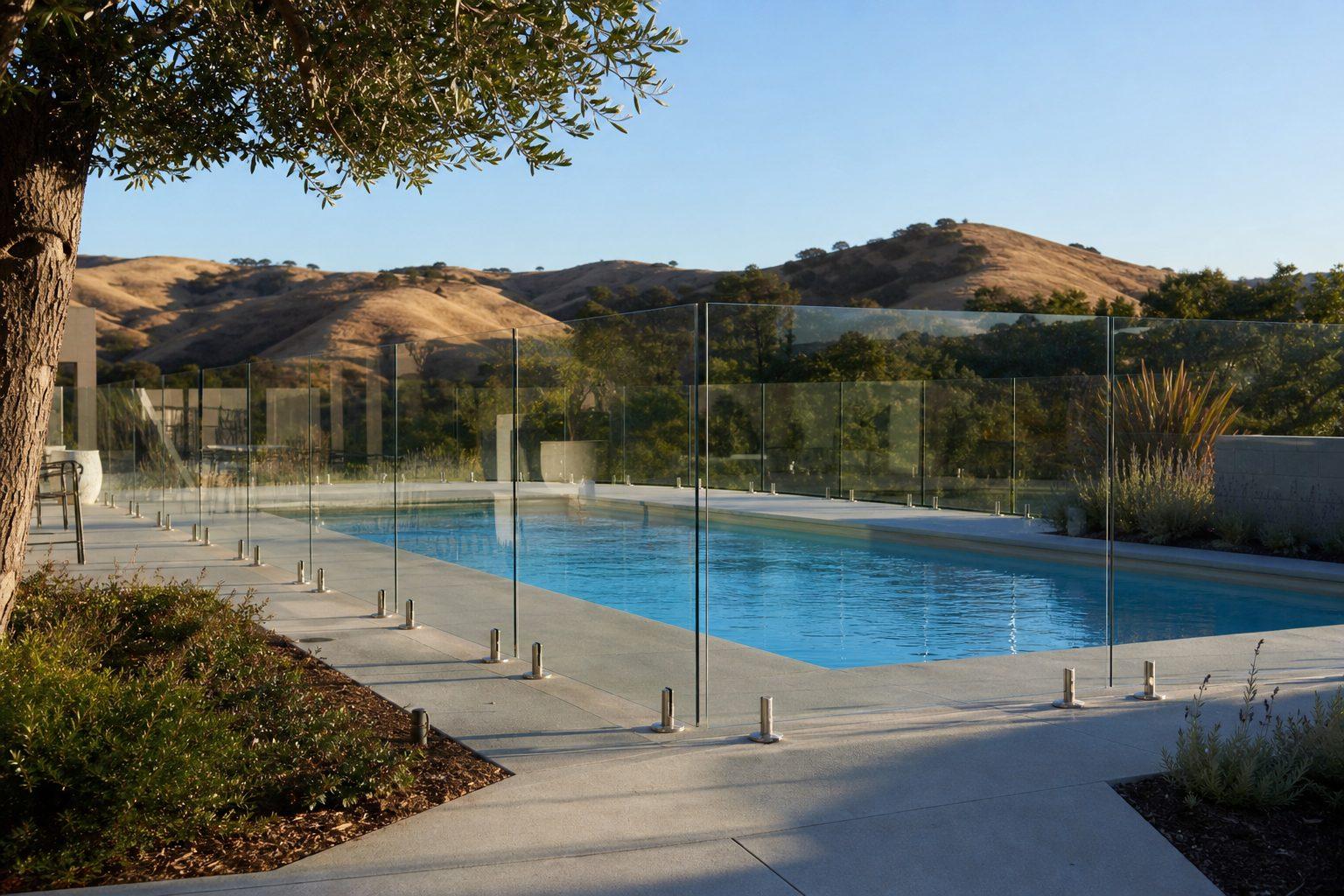
Hillside homes where a solid fence would remove the reason for the site. Pool enclosures that need a code-compliant barrier without walling off the yard. Rooftop terraces and event decks on hospitality projects. Coastal properties, where glass and stainless handle salt air better than most alternatives.
It is the most expensive way to build a fire-conscious perimeter, and it is the only one that keeps the view. For most projects the answer is glass where the view matters and metal everywhere else — we will draw that split for you rather than sell you glass for the whole run.
A pool barrier doing two jobs: the code-required enclosure, and not deleting the view the yard was designed around.
On the ground
Glass we have installed
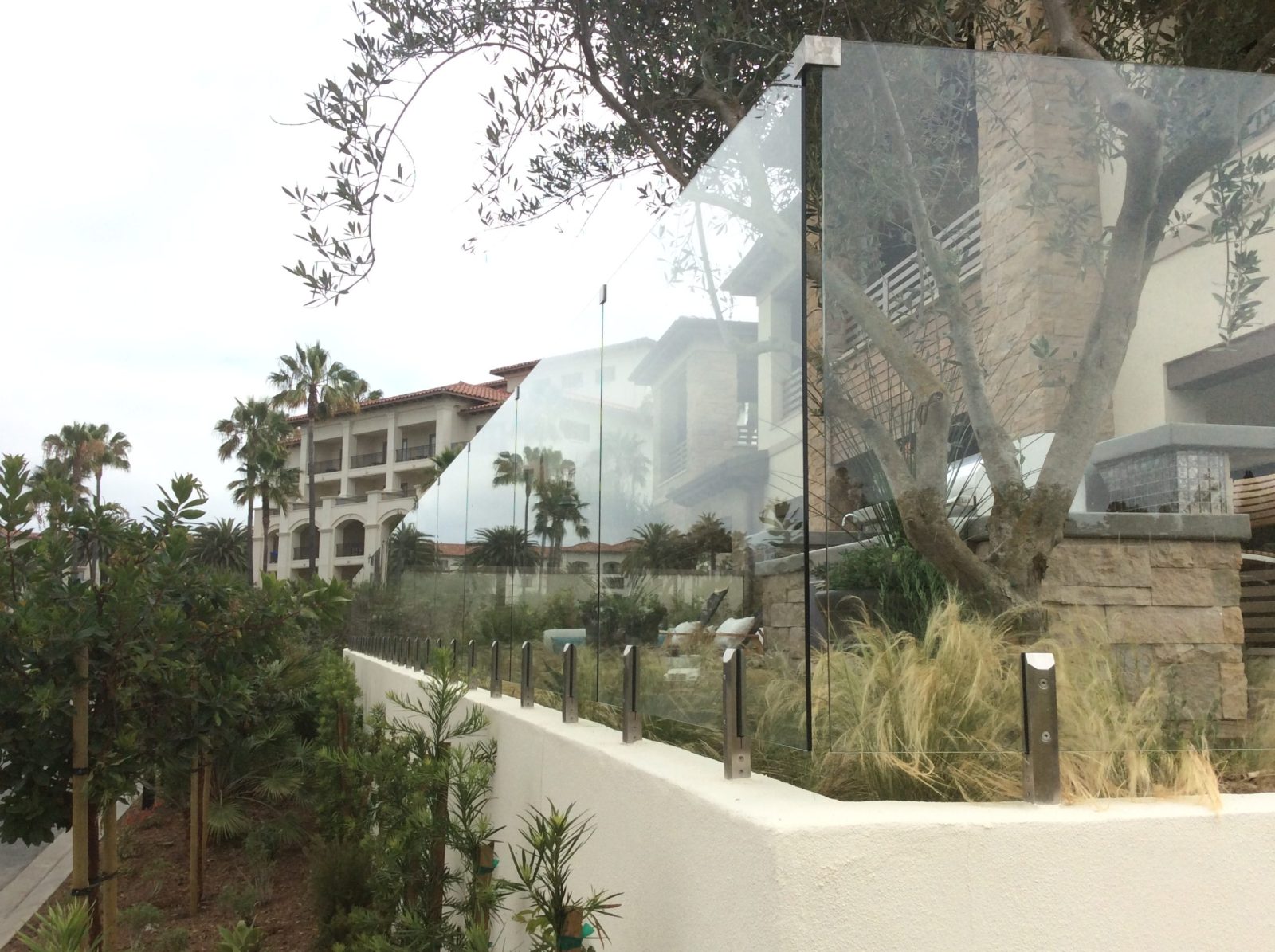
A residential run set on a low wall — the barrier height comes from the wall plus glass.
Public installation: high traffic, frequent cleaning, and hardware chosen for both.
These are glass fence installations of ours. They are not presented as rated fire assemblies — a fire rating belongs to a specific tested configuration, and we will tell you plainly which projects carry one.
The point of all of it
This is what you were protecting
Every other material on this site protects the house. Glass is the only one that also protects the reason you chose the site.
If your perimeter has to be rated and the view is the asset, this is the conversation to have with us early — while it is still a drawing rather than a built wall you are trying to undo.
Specification support
How we spec a rated glass project
A fire rating on glass belongs to a tested assembly — the glass, the frame and the fixings together. The only rating worth having is one confirmed against your actual elevation, so that is what we establish before anything is ordered.
You get the qualifying configuration in writing with the documentation behind it, which means what you hand a plan reviewer is the same thing we supply. Three steps, and we will tell you at step three if metal would serve you better on part of the run.
How we handle a rated project
1. You send the elevation and the rating your jurisdiction is asking for — in minutes, and whether it is integrity or integrity plus insulation.
2. We confirm a qualifying assembly with the glazing manufacturer against your drawings.
3. We come back with the tested configuration, its documentation, and a price — and we tell you if metal would serve you better on part of the run.
Next step
Send us the drawings and the required rating
Glass is specified from drawings, so that is where we start. Send the elevation and the rating your jurisdiction is asking for, and we will come back with an assembly that holds it, in writing.