Expert Fence Supplies, Trusted Solutions
Call Us Mon-Fri, 6:30am – 5pm
Call Us Mon-Fri, 9am-6pm
FS Firewall Systems / Aluminum
Aluminum fencing gives you a non-combustible perimeter with a much lighter visual profile than sheet steel — as a solid full-privacy panel, or as horizontal slats with clean shadow lines and spans that suit modern architecture.
Like steel, it does not ignite and adds no fuel to a fire. Unlike steel, it is light enough for long gates and it does not corrode, which matters on coastal and hillside sites.
Zone 0 eligible
Aluminum is a metal, so it does not ignite, does not sustain combustion and does not carry flame along its length. That makes it eligible for the first five feet around a structure.
This is the distinction that matters when a plan reviewer or an insurer looks at your drawing. Class A rated materials describe how slowly flame spreads across a surface. Non-combustible materials do not burn at all — and California’s Zone 0 rules for the first five feet around a structure are written around non-combustibility, not flame-spread class.
Where aluminum belongs
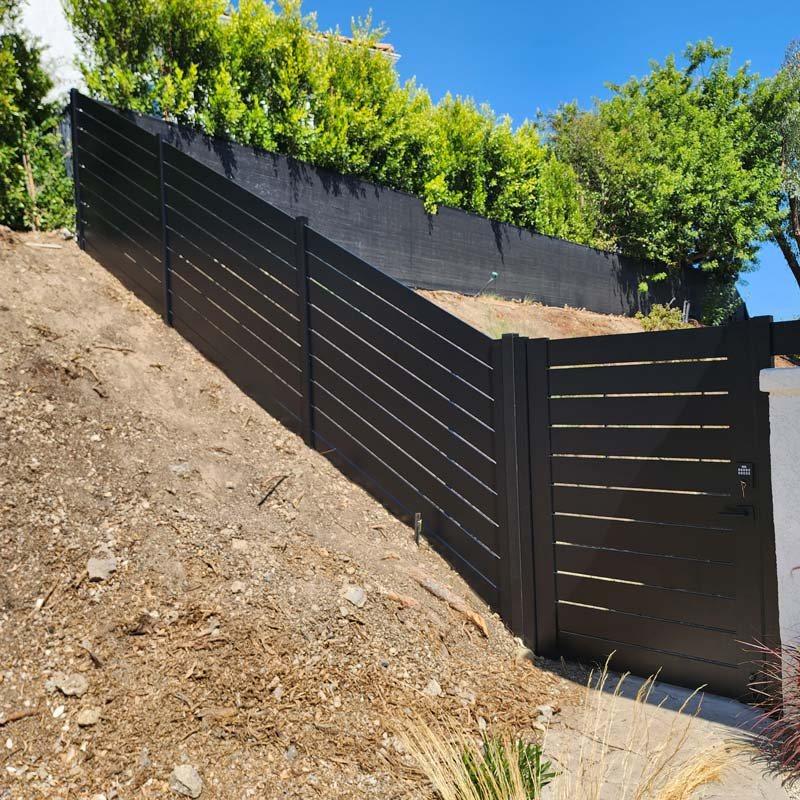
A canyon lot is the best view in Southern California and the worst fire exposure in it. The slope funnels heat upward, the wind arrives loaded with embers, and the fence on the downhill side is the first structure in the path.
That fence has two jobs that usually fight each other. It has to be non-combustible, and it has to not feel like a wall — because nobody buys a view lot to look at sheet metal. Aluminum is how you get both: metal that does not ignite, in a profile that reads as architecture rather than fortification — slats where you want to keep the view, solid panel where you want the privacy.
It is also light. On a slope, where gates get wide and posts get expensive, that stops being an aesthetic point and becomes a structural one.
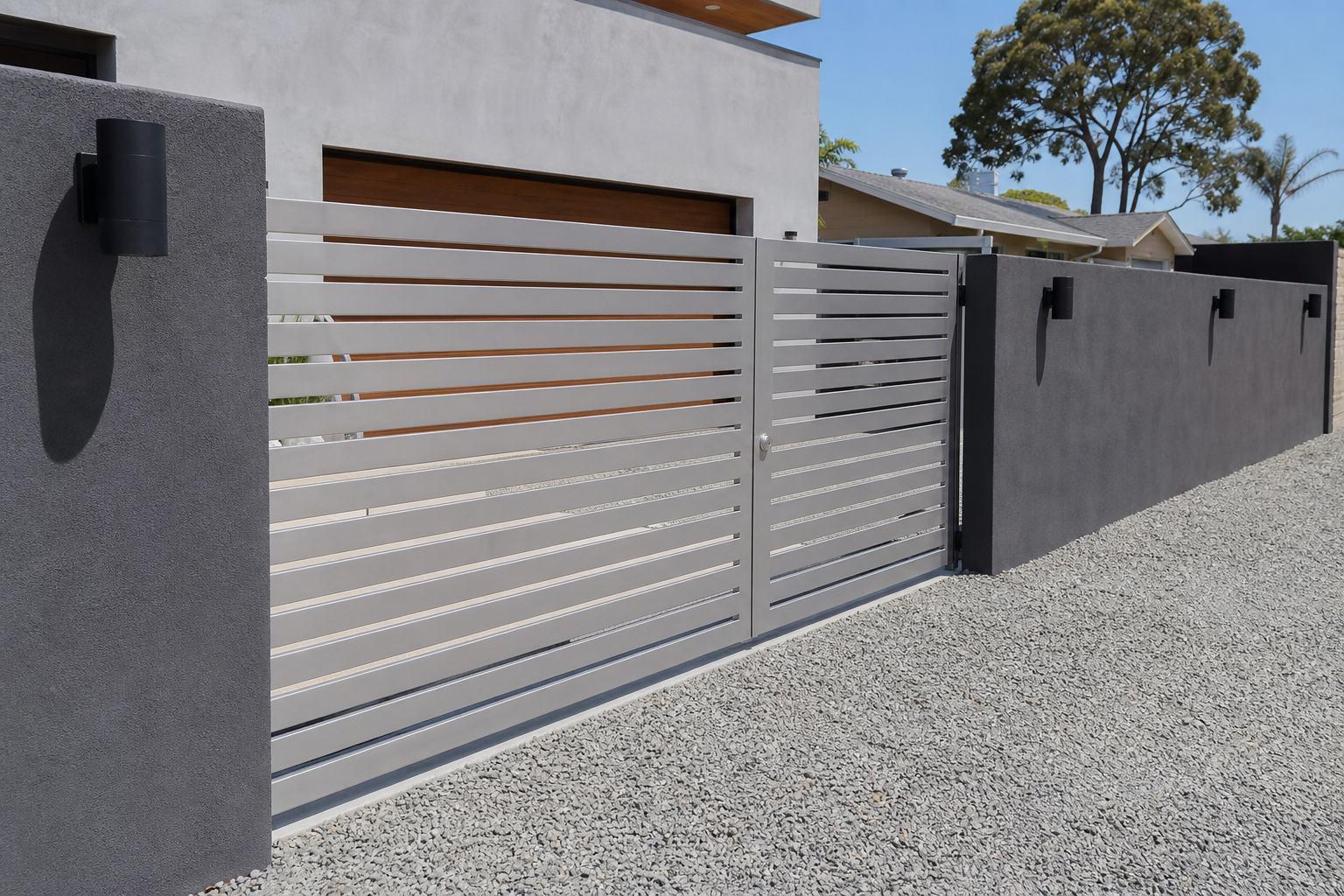
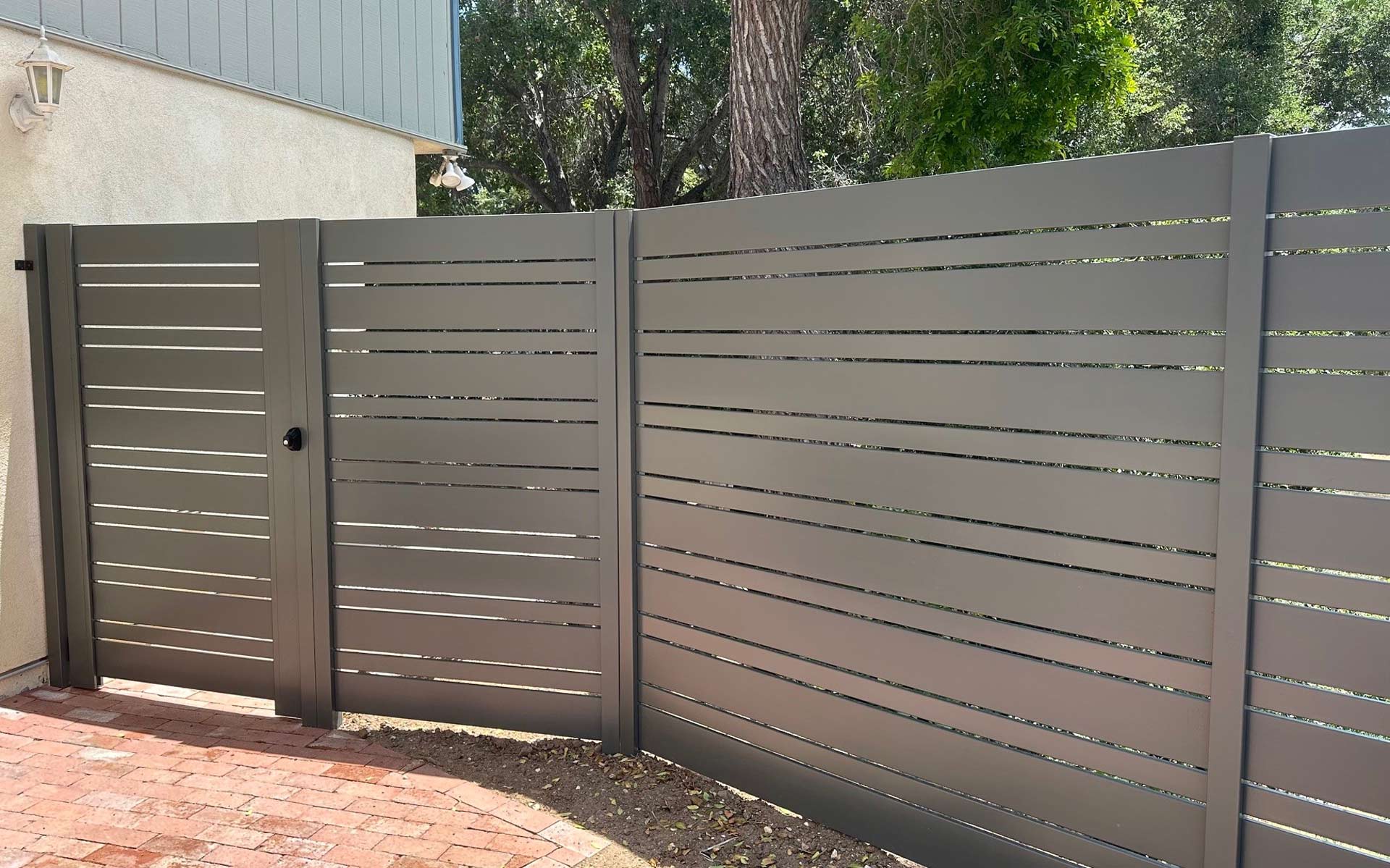
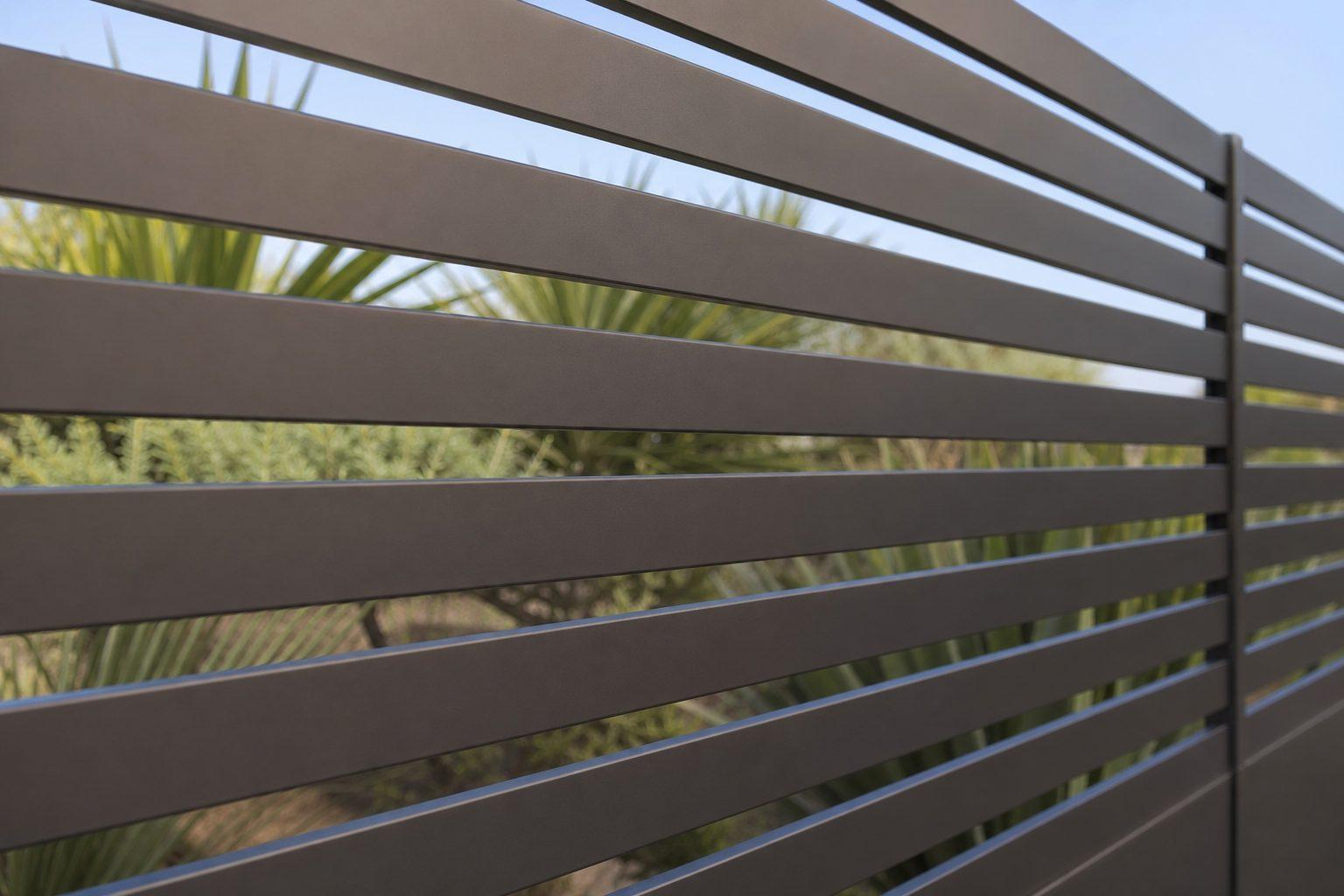
Powder-coated slats: the shadow line does the design work, the metal does the fire work.
Two ways to build it
Aluminum comes in two configurations, and the choice is about what you want to see. It is not a fire decision — both are metal, and both are eligible for the first five feet.

Aluma-Wall
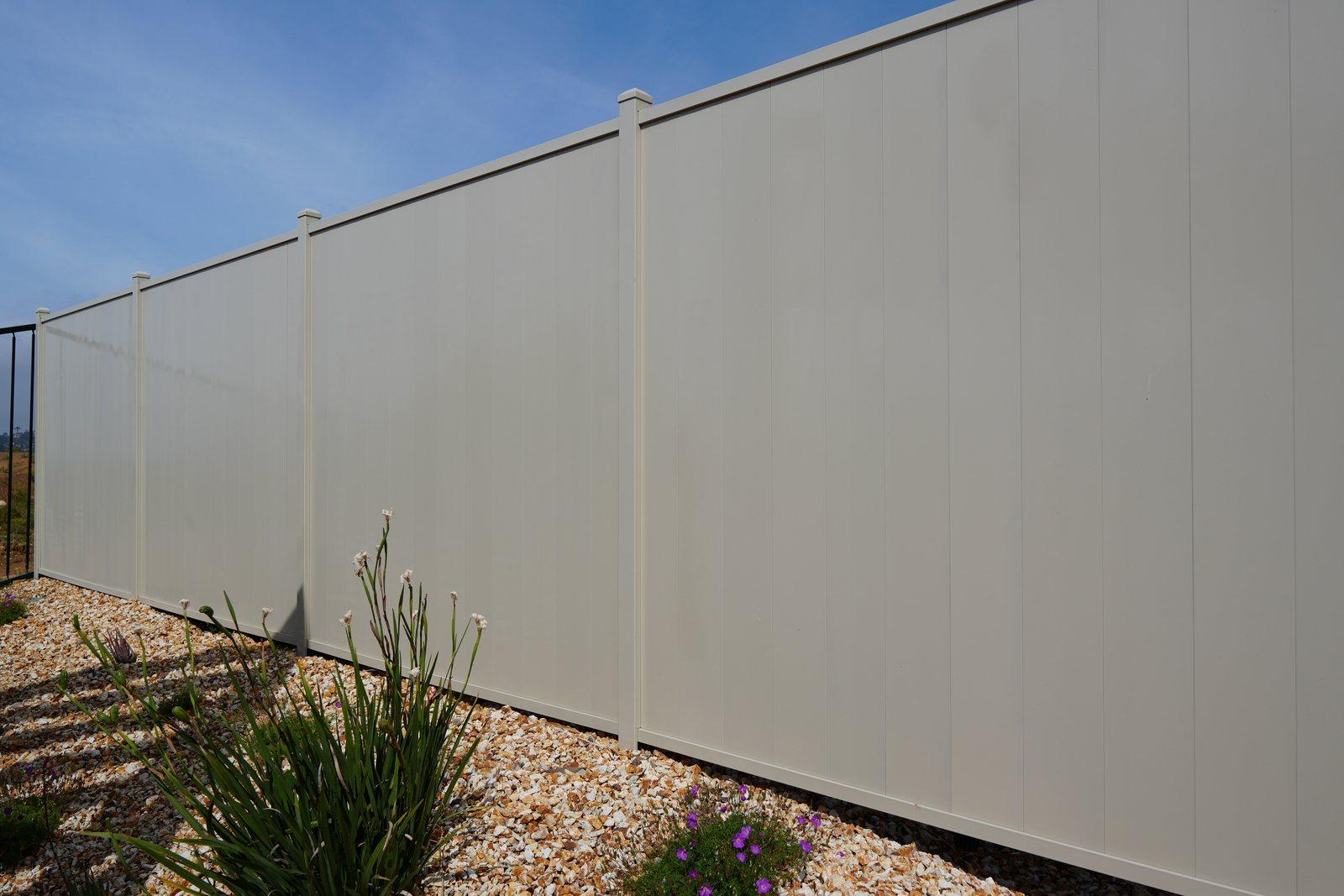
Full privacy
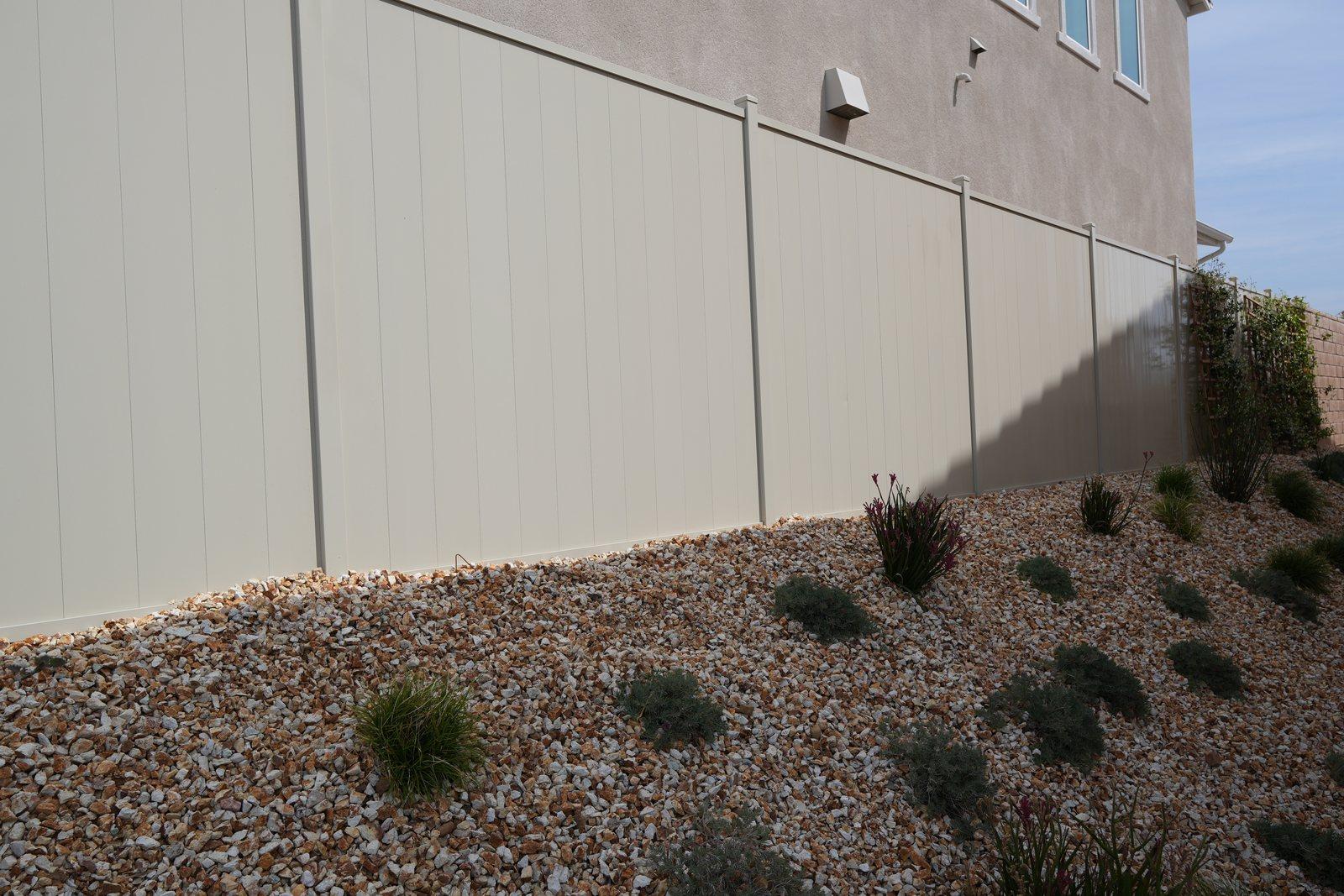
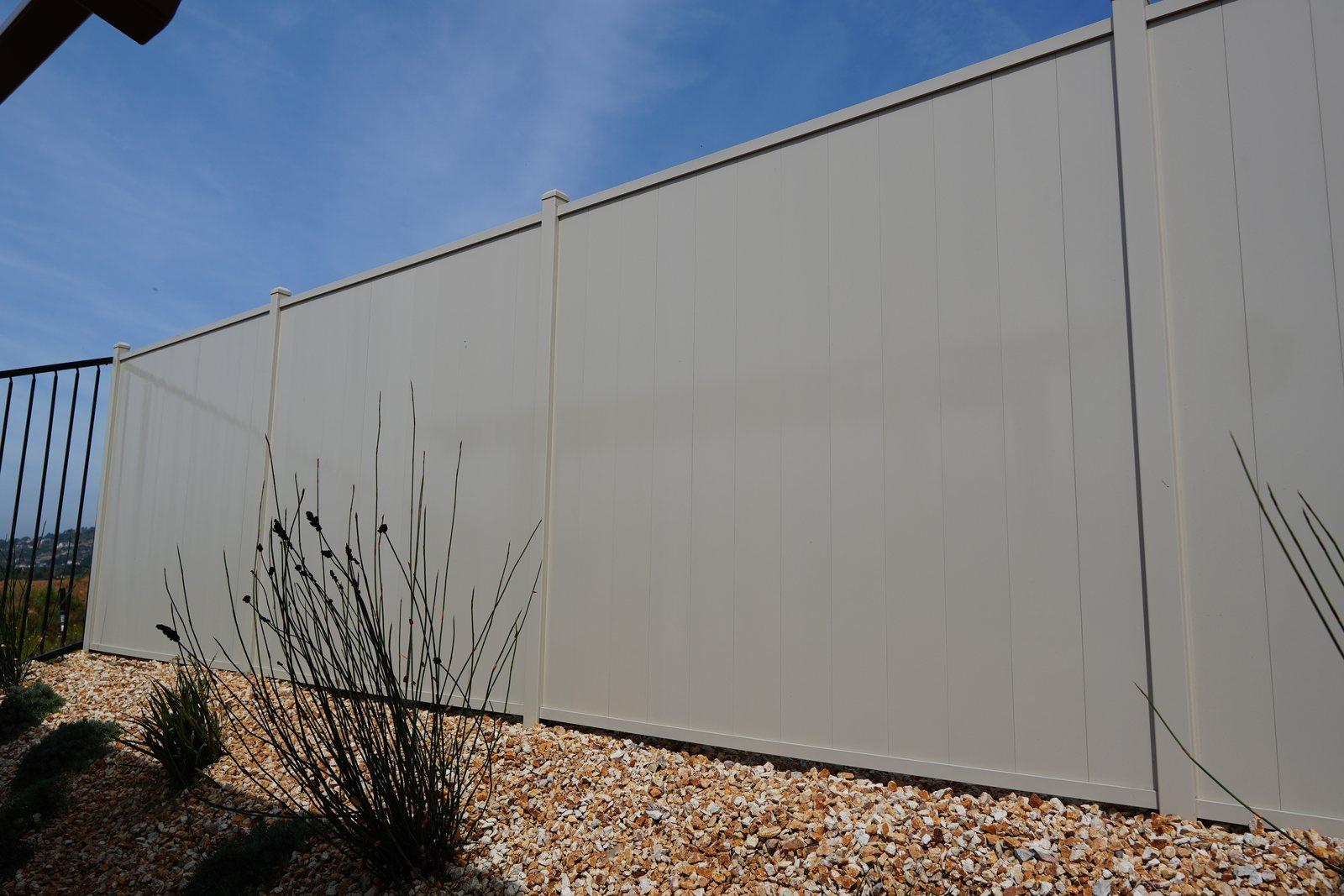
Boards lock edge to edge into a solid panel with no gap and no sightline, running horizontal or vertical, in a range of powder-coat colors, with a standardized gate that matches the run. This is the one for a shared property line, a pool equipment screen, or a side yard a few feet from a neighbor’s wall — anywhere a slat fence would leave you looking at each other.
Slat
A view through
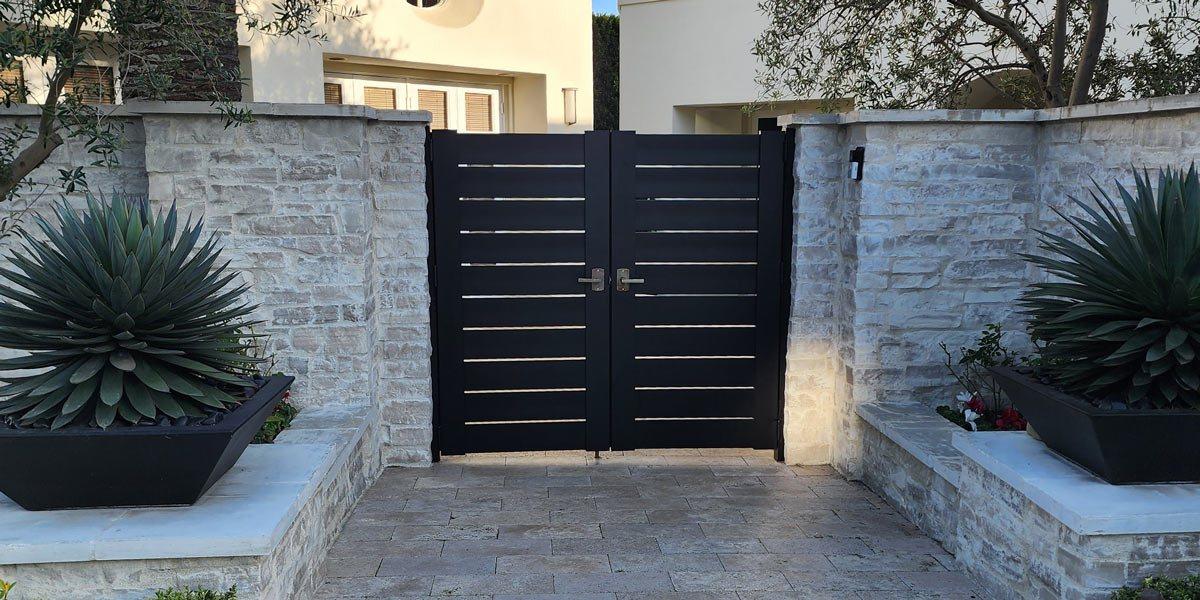
Spaced horizontal boards. You keep the airflow, the light and the view down the canyon, and the shadow lines read as architecture rather than fortification. This is the one for a downhill boundary on a view lot, a frontage where an HOA wants transparency, or a pool run that has to meet barrier code without becoming a wall.
Same metal, same Zone 0 answer, same gate hardware. If one project needs both — privacy on the neighbor’s side, slats facing the view — they detail together in a matching finish.
The evidence
Steel’s case rests on published fire research. Aluminum’s case is simpler and, if anything, harder to argue with: it is a metal, and metals do not burn.
There is no ignition temperature for a fire to reach, no fuel for it to consume and no surface for flame to travel along. A flame-spread test measures how quickly fire moves across something combustible. Run it on aluminum and there is nothing to measure.
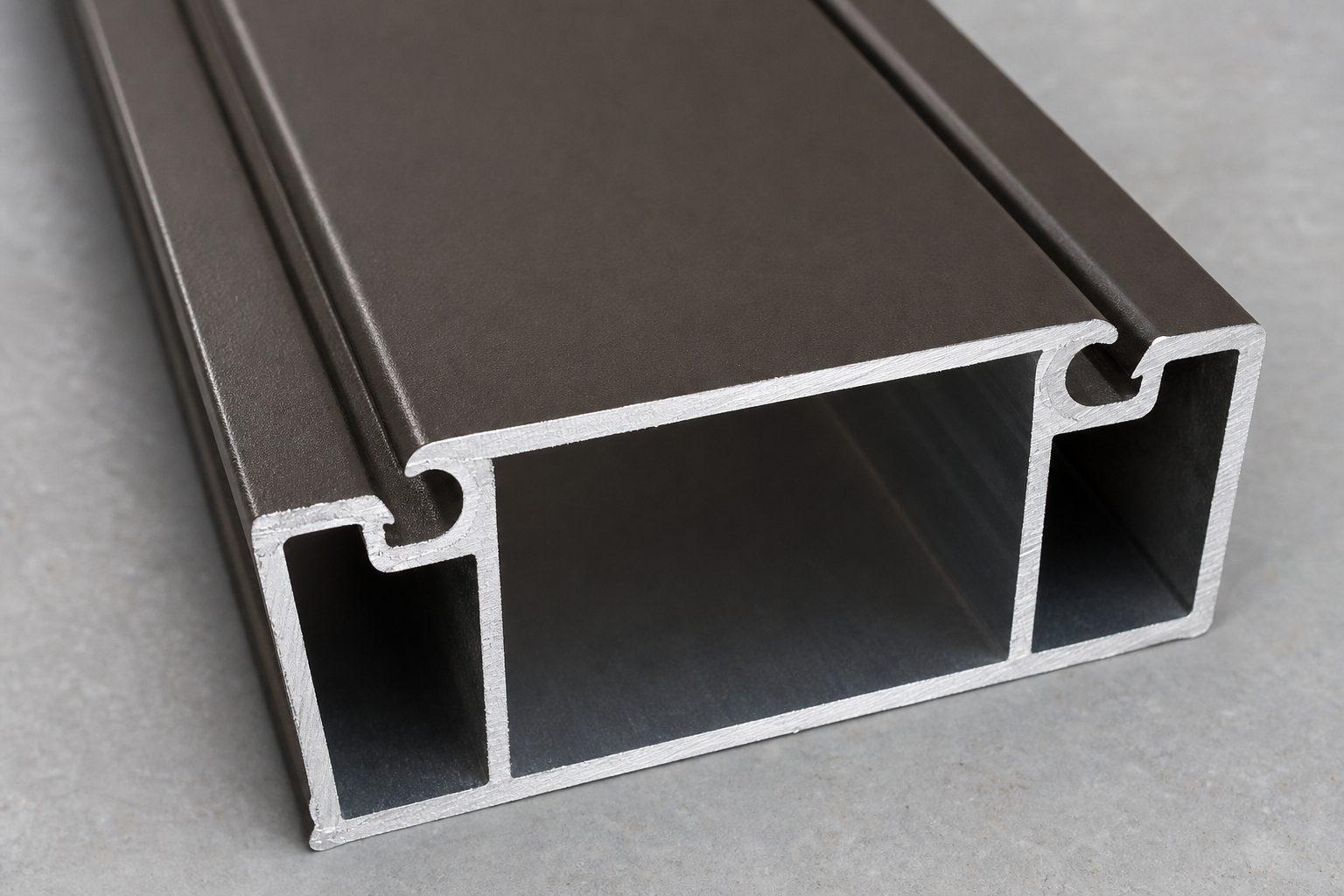
An extruded slat in section. Aluminum through the entire profile, with the powder-coat finish on the outer faces — the only part that is not raw metal.
What we hold on file
A non-combustibility advisory note for 6000-series aluminum — the alloy family our slats are extruded from.
Interpon powder coating fire propagation data — because the one thing on an aluminum fence that is not raw metal is the finish on the outside of it, and that is a fair question to ask. It has been tested.
Both documents are at the bottom of this page. Neither is an ASTM E84 Class A certificate, and that is the point of the next section.
Where this sits in California code
California’s Zone 0 is written around non-combustibility, and aluminum is non-combustible. That is a property of the metal, so it needs no test certificate, cannot expire and cannot be revised. It answers the requirement outright.
This is why you will not find an ASTM E84 Class A test for aluminum, and why it does not need one: a flame-spread rating measures how quickly fire travels across a combustible surface. Aluminum has no fuel to contribute, so there is nothing for the test to measure.
Worth keeping in mind when you compare quotes: a flame-spread class still describes a material that burns, just slowly. Non-combustible is the stronger claim, and it is the one that maps onto what Zone 0 asks for. If a specification calls for a Class A listing on an aluminum fence, send it over and we will help get the wording right before it reaches a plan reviewer.
The morning after
On a canyon lot the fence is not decoration — it is the last few feet of defensible space, and it is the part of it made of material rather than gravel and air.
A metal fence comes through an ember storm sooty. It gets washed. A timber or composite fence on the same line becomes a wick that runs from the brush straight to the deck.
Detailing the first five feet
Zone 0 is measured from the structure outward, and gates are where it usually gets complicated. A gate needs hardware, a frame, a latch post and clearance — and on many lots the only sensible place for it is inside those first five feet.
Aluminum solves this better than anything else we supply. It is non-combustible, so it is eligible; and it is light, so a wide gate does not need an oversized post and heavy hardware to stay square over a decade of daily use.
The other half of the job is not the fence at all. Keep the strip beneath it non-combustible too — gravel, decomposed granite or bare mineral soil. A non-combustible fence standing in a bed of bark mulch has given a fire a way in underneath it.
A wide aluminum gate in the Zone 0 strip — gravel, no planting, nothing to carry a flame.
Why aluminum
Inherently non-combustible
No ignition point to reach, no fuel contributed, no flame spread.
Corrosion resistant
Aluminum does not rust. It suits coastal air and irrigation spray.
Light for long spans
Low weight makes wide gates practical without sagging hardware.
Powder-coated finish
Baked finish over prepared metal, with published fire propagation data.
Architectural profile
Horizontal slats read lighter than sheet panels on a hillside or a view lot.
Long service life
Decades, with nothing to stain or seal and no boards to replace.
On the ground


On availability
This line is still expanding, and not every profile and color is stocked at all times. Call before you specify a finish on a drawing and we will tell you what is actually available for your window.
The paperwork
If a plan reviewer, an insurer or an HOA asks what this fence is made of, these documents answer them — and they are the accurate ones to send, rather than a flame-spread certificate that should not exist for a metal.
Advisory note
Aluminum non-combustibility advisory note
The advisory note covering 6000-series aluminum and its non-combustible classification.
Test data
Interpon powder coating — fire propagation data
Test data for the powder coat finish applied over the aluminum substrate.
Brochure
Firesafe fencing brochure
Product brochure for the aluminum firesafe slat fencing range.
Brochure
Aluma-Wall brochure
Our full-privacy aluminum system — panel and gate details, dimensions and finish options.
Checklist
Homeowner checklist — preparing your home for fire insurance
A practical checklist for homeowners working through a carrier’s requirements. Start here if you have had a letter.
Had a letter from your carrier? Work down this checklist first. Half the items cost nothing, and the fence is usually the one they will not let you skip.
Next step
Tell us the run, the height, and how close it comes to the structure. We will come back with the profile, the finish options that are actually in stock, and a figure.