

Building on a slope can complicate what seems like a simple fence project. The angle of the ground changes everything—from how your panels line up to how well your fence holds up over time. Choosing between stepped and racked fence panels depends on how steep your yard is and how you want the finished line to look.
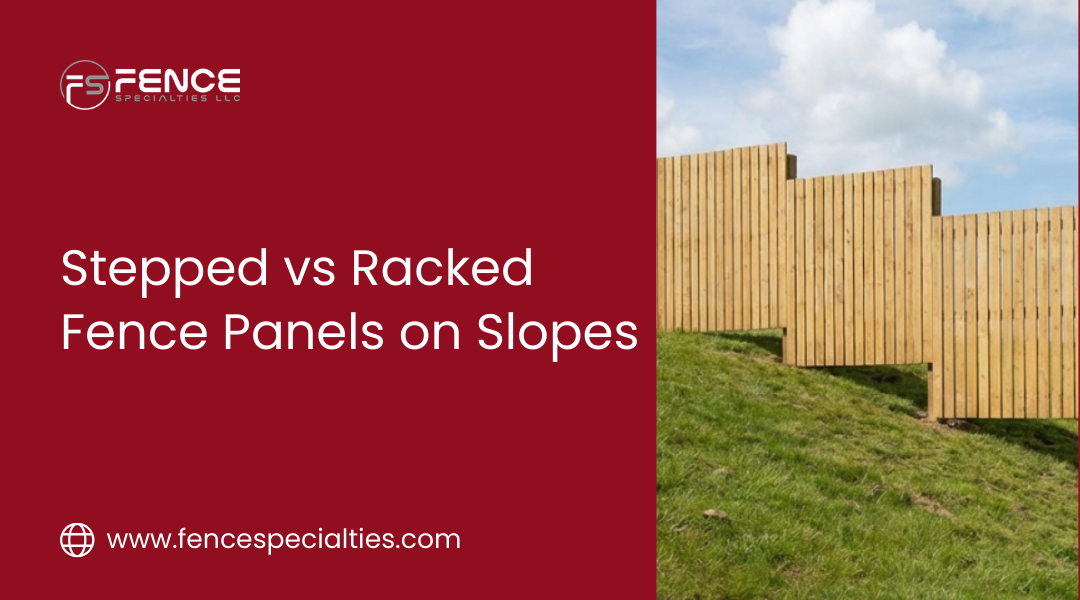
When you install a stepped fence, each panel sits level, creating a stair-step pattern across the slope. A racked fence, on the other hand, tilts the panels to follow the ground’s contour in one smooth run. Both methods can look clean and professional when planned carefully, but they perform differently when it comes to gaps, load, and drainage.
At Fence Specialties LLC in Riverside, California, you can explore both options with materials suited to your site and slope. With decades of experience supplying contractors and homeowners across California, the company understands how regional conditions—from soil type to supply access—can affect your fence choice and long-term stability.
Understanding Stepped And Racked Systems
When working on sloped ground, you need to decide how your fence will meet the change in elevation. The two main systems—stepped and racked—differ in how they align panels, adapt to grade changes, and fit technically with your site’s slope.
Structural Geometry And Panel Alignment
A stepped installation places each fence panel level, forming a series of horizontal sections that “step” up or down with the terrain. Posts remain vertical, and each panel meets the next at a fixed height change. This design gives you clean horizontal lines but leaves small triangular gaps beneath panels on steep slopes. You can fill these with landscaping or trim boards if desired.
A racked fence changes the angle of each panel so the top and bottom rails follow the land’s slope. The pickets stay upright while the rails tilt, matching the rise over run of the grade. Because the panels follow the ground’s contour, racked fencing avoids open gaps and keeps ground clearance consistent.
| Feature | Stepped Fence | Racked Fence |
|---|---|---|
| Panel Orientation | Level | Angled |
| Post Alignment | Vertical | Vertical |
| Ground Fit | May leave gaps | Closely follows slope |
| Appearance | Tiered | Continuous |
Visual Rhythm Across Changing Grades
The stepped effect creates a clear, structured look, especially visible from a distance. Each panel acts like a platform, producing a strong rhythm across the grade. On moderate slopes, this pattern can frame the property neatly. On steep grades, however, the step differences can become more pronounced and may appear abrupt.
In contrast, racked fencing creates a smoother line that flows with the land. The panels keep visual continuity along uneven ground, which often feels more natural in landscaped or residential settings. Because there are no defined steps, the fence line appears gradual rather than geometric. The choice depends on how much visual definition you prefer—crisp and stepped versus seamless and sloped.
Where Each Method Is Technically Viable
You can use a stepped fence where the ground has uniform, moderate slope changes. It works well with pre-assembled panels because each section stays level. This method also fits hard surfaces like retaining walls or terraces, where panels must remain straight. However, excessive slope variation requires deeper post settings and custom panel adjustments.
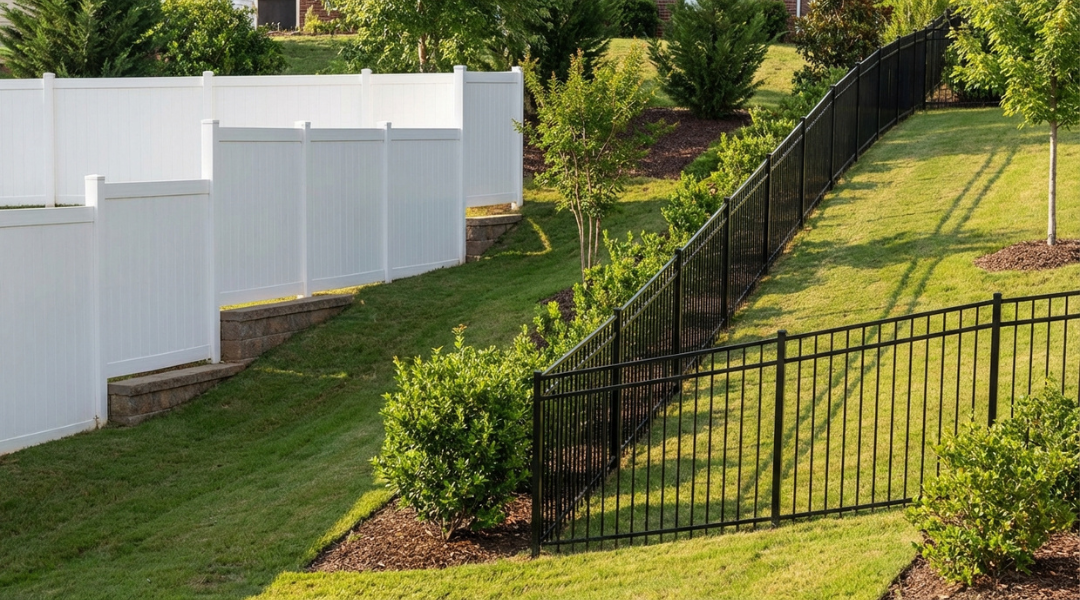
A racked installation performs best on continuous slopes and uneven grades where height changes are small but consistent. Because the rails adjust to match the incline, there’s less need for labor-intensive post height variation. This type of build suits vinyl, aluminum, or metal systems designed to flex within specific tolerances—usually up to about 10–12 inches of rise over an 8-foot panel. For steeper terrain, you often combine short racked segments with stepped transitions to maintain both structure and alignment.
When Slope Makes The Choice Relevant
The steepness and shape of your yard’s terrain directly affect how a fence should be installed. Soil conditions, slope changes, and grade variations determine whether a stepped or racked fence performs better over time.
Grade Percentage And Transition Frequency
The grade percentage—the rate at which your yard rises or falls—guides your choice between stepped and racked panels. A gentle slope under 10% often suits a racked fence, where the rails follow the land’s contour. This design keeps the bottom of the fence close to the ground and reduces gaps between panels.
When the slope exceeds 10–12%, a stepped fence usually works better because it keeps each section level. The result is a clean, tiered look that holds alignment even with steep or uneven terrain.
Frequent grade transitions—when the slope direction or angle changes every few feet—make stepped designs harder to level. Racked fencing can adjust naturally in these situations, offering smoother transitions without major post adjustments. Builders often check grade changes by measuring every 6–8 feet, ensuring consistent panel fit along the slope.
| Grade % | Recommended Fence Type | Reason |
|---|---|---|
| 0–10% | Racked | Follows slope contours easily |
| 10–12%+ | Stepped | Keeps panels level for steeper grades |
Soil Movement And Long-Term Settlement
Soil plays a major role in sloped fence installation. Soft or shifting soil may cause posts to lean over time, especially if the ground collects water. A stepped fence can distribute weight more evenly between posts, making it more stable on unstable terrain.
In contrast, a racked fence relies on angled rails to hold its shape. If the soil beneath shifts, these rails may bind or warp. You can reduce this risk by using longer posts, deeper holes, and concrete backfill to limit settlement.
If your area experiences heavy rain or clay-based soil, track post alignment yearly. Small footing adjustments early can prevent larger structural issues later.
When Flat Terrain Makes The Distinction Negligible
On flat terrain, the difference between stepped and racked installation becomes minimal. The ground does not require angled rails or staggered panels, so both systems perform nearly the same.
In this situation, appearance and cost often guide the choice. You may find stepped panels easier to install because the posts and rails remain level and require less measuring.
A racked fence on flat ground provides no significant visual or functional advantage. Choosing based on available panel styles, materials, and local building codes is usually more practical when slope is not a factor.
Material Behavior On Uneven Ground
Different fencing materials react in distinct ways when placed on sloped or uneven terrain. How your panels, posts, and fasteners respond to shifts in grade affects both the strength of the fence and how well it conforms to the slope. Choosing materials with suitable flexibility and stability reduces gaps and prevents future alignment issues.
Wood, Vinyl, Aluminum, And Steel Responses
Wood fences can adapt slightly to uneven ground because wood expands, contracts, and can be trimmed on site. You can adjust pickets or rails during fence installation to fit the slope, but moisture and soil movement may cause long-term warping or gaps. Applying sealants and setting posts in concrete footings helps reduce shifting.
Vinyl fences offer low maintenance but less flexibility. Their prefabricated panels often require either racking systems or taller posts to follow a slope. When forced into steep contours, vinyl rails may crack, so extra care is needed to maintain alignment.
Aluminum and steel fences perform well on steep or uneven grades when installed with racked panels. Metal rails hold shape, resist rot, and withstand wind stress. However, metal fences can transmit ground movement to the posts, so secure anchoring and drainage planning are essential.
| Material | Adaptability | Maintenance Need | Slope Suitability |
|---|---|---|---|
| Wood | Moderate | High | Good on mild slopes |
| Vinyl | Low | Low | Works best on gentle slopes |
| Aluminum | High | Low | Excellent on steep grades |
| Steel | High | Moderate | Strong for most slopes |
Rail Flexibility And Fastener Stress
Flexibility determines how well a rail or panel adjusts to uneven terrain. Racked fences rely on flexible rails to contour with the ground, while stepped fences use rigid rails raised in sections. On steeper slopes, flexible systems are easier to fit, but too much bending can overstress fasteners.
Bolts, screws, and brackets handle different kinds of tension depending on slope direction. When you build a fence on a slope, make sure each fastener has full contact with both post and rail. Reinforced corner brackets or double-fastening methods reduce loosening after heavy rain or frost cycles.
Inspect for signs of fastener pull at least once per season. Gaps around nails, cracked vinyl connections, or rust on metal joints suggest the fence is moving with soil changes. Replacing corroded hardware and tightening connections will restore rigidity before panels sag.
Panel Rigidity Versus On-Site Adjustment
Rigid fence panels like vinyl, steel, or aluminum deliver a straight, uniform appearance but allow little field modification. For a clean look, many installers choose a stepped method, especially on privacy fences where consistent panel height matters.
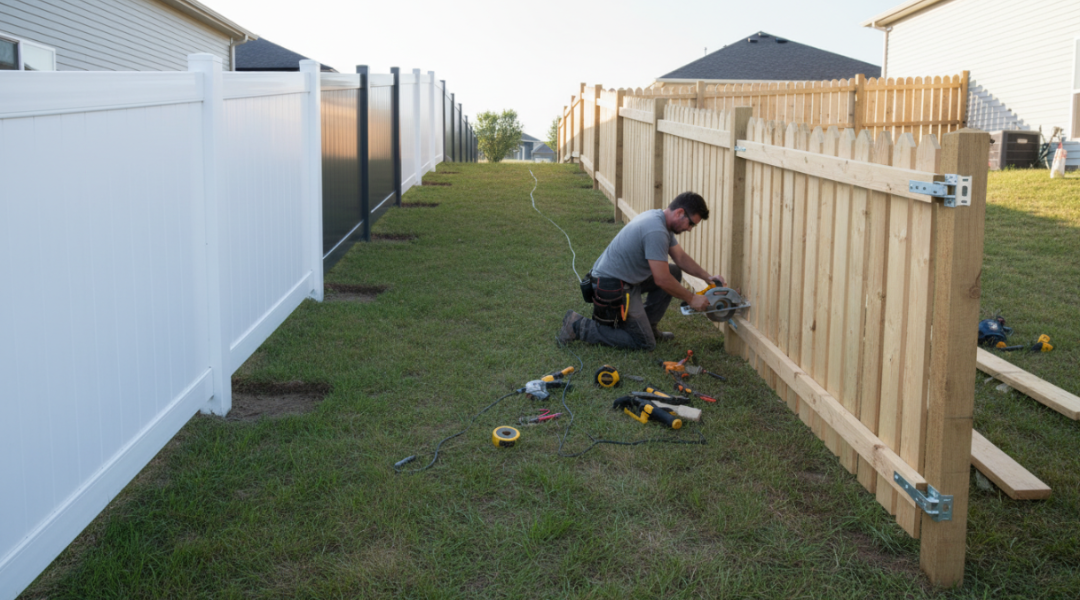
If your yard has irregular slopes or complex contours, consider using wood panels or picket fencing that can be trimmed to height on site. This flexibility prevents large ground gaps. Cutting lower pickets or shortening a lower rail ensures closer fit along grade.
During fence installation, balance rigidity and adaptability. Too much rigidity increases stress at the post base; too much flexibility leads to uneven lines. On sloped yards, mix rigid panels with adjustable brackets or pivoting fasteners to maintain both strength and a natural transition across changing terrain.
Tradeoffs In Drainage, Gaps, And Load
Slope changes affect how water flows around your fence, how tightly panels meet the ground, and how wind forces act on the structure. Choosing between a stepped or racked design changes how well the fence handles runoff, prevents soil loss, and resists pressure from weather and movement.
Ground Clearance And Containment Concerns
A stepped fence keeps each panel level, leaving small gaps at the bottom where the ground drops. These openings can let pets or mulch escape, but they also improve water drainage by preventing pooling. On steep slopes, you may need to fill or grade the lower side to reduce visible gaps. Stepped setups work best where soil erosion is limited and appearance matters more than full containment.
A racked fence keeps panels angled to match the slope, closing gaps along the bottom. This helps contain gravel, mulch, or pets, and provides a neater line against uneven soil. However, tight ground contact can trap moisture at the base of wooden panels. To limit decay, you may need to raise the lowest point slightly or use moisture-resistant materials. Proper spacing and slope support are key for good water flow.
| Fence Type | Ground Gap | Water Flow | Containment |
|---|---|---|---|
| Stepped | Moderate to large | Good drainage | Lower |
| Racked | Minimal | May trap water | Higher |
Wind Exposure And Lateral Forces
In stepped fences, each panel stays vertical and isolated. This means wind loads act more evenly on each section, and solid construction at posts helps resist pressure. The staggered layout can create slight turbulence between steps, but it generally improves structural stability. Using sturdy post anchors is important, especially in open or windy locations.
A racked fence forms a continuous plane that slopes with the ground. While this appearance is smooth, the angle can increase exposure to lateral forces in strong winds. If your yard faces frequent gusts, panels may flex more unless reinforced rails or deeper-set posts are used. Metal or vinyl materials with flexible joints handle this stress better than rigid wood sections.
Maintenance Implications Over Time
Water flow and ground contact strongly affect how long each design lasts. Stepped fences usually stay drier since the base is raised in places, which helps prevent rot and corrosion. But uneven soil settling under stepped sections can create leaning posts or new gaps that need regrading or resetting over time.
Racked fences require attention where water drains downhill along the slope. Moisture can collect around lower rails, speeding decay and staining on wood or metal. You should check slopes yearly and clear debris channels to keep runoff moving.
Routine care differs:
- Stepped setups: inspect post levels, fill low soil spots, and repaint exposed bases.
- Racked setups: wash lower rails, seal moisture-prone joints, and tighten angled fasteners.
Consistent upkeep ensures both fence types remain stable, especially where soil shifts or rainfall is frequent.
Regional Supply Realities At Fence Specialties LLC In Riverside, California
Fence Specialties LLC manages steady contractor demand, a broad inventory, and local climate challenges that influence fence design and installation. You deal with both supply logistics and environmental conditions that shape how stepped or racked panels perform once installed.
Contractor Demand Patterns Across Southern California
In Southern California, many contractors work on tight schedules with customers expecting quick turnaround. Fence Specialties meets this need through same-day pickup at its Riverside, Oceanside, San Jose, and Sacramento branches. This helps you start projects without waiting for deliveries or special orders.
Most requests come from residential jobs needing vinyl and wood panels, but commercial iron and aluminum orders remain steady. Builders often need consistent color, matching rails, and accurate sizing for sloped lots, driving the store to maintain a wide mix of pre-built options.
Because pricing is offered at wholesale-to-everyone, you gain access to bulk discounts without requiring large orders. Seasonal changes also shape demand: spring and early summer bring the most fence installations, while fall is used for repairs or property upgrades. The company’s direct ties with brands like Ameristar and TREX keep stock reliable and materials consistent across branches.
Stock Panel Formats Versus Field Modification
When you buy at Fence Specialties, most panel systems come in standard 6- or 8-foot widths. This suits many level lots, but hillside properties often force you to choose between stepped or racked alignment. Stepped fencing uses level panels on graded ground, while racked panels follow the slope’s angle.
Contractors in Riverside often order extra rails or pickets for field trimming when slopes are irregular. This flexibility reduces waste and avoids long lead times on custom panels. Ready-to-install formats simplify work for small crews, while larger contractors commonly buy unassembled kits to adapt on-site.
You can compare product types easily since materials are grouped by category—vinyl, aluminum, wood, and steel—and stocked in multiple post lengths. Fence Specialties keeps connectors, caps, and mounting brackets available for both stepped and racked setups, helping you align fence sections smoothly without major redesigns.
Climate And Soil Conditions In Riverside, California
Riverside’s semi-arid climate brings strong sun, dry soil, and sporadic heavy rain. These conditions affect how fence panels age and how posts hold in the ground. You need materials that handle expansion, UV exposure, and shifting soil after storms.
Clay-based soil in parts of Riverside expands when wet and contracts as it dries, which can loosen posts over time. To counter this, you may use deeper-set posts or add concrete footings for stability, especially along steep grades.
Winds that sweep down from canyon areas test panel alignment and fasteners. Vinyl panels resist moisture but may flex more under stress. Metal and composite materials tend to stay sturdier in fluctuating temperatures. Selecting the right material and attachment method helps your stepped or racked fence remain stable throughout Riverside’s changing seasonal cycles.