


Planning a fence line involves more than marking a boundary with a string and posts. Slopes, property lines, and underground utilities all affect where your fence can safely and legally stand. You need to place every post within your property limits, avoid easements, and factor in terrain so your fence stays straight, stable, and compliant.
A well-planned fence line ensures your yard fences, from front yard fences to tall privacy fences, fit your landscape and meet local setback rules. You’ll also need to understand how soil grade changes impact total fence length and stability—especially on uneven ground or where drainage runs close to property edges.
By understanding these physical and legal factors before installing a wood or chain link fence, you’ll avoid rework, extra costs, and potential neighbor disputes. The right planning helps you select the best fence materials, account for utilities, and ensure your fence project lasts for years without hidden problems.
When Fence Planning Is More Complicated Than Drawing A Straight Line
Uneven land, uncertain property records, and hidden obstacles underground can turn a simple fence project into a complex one. Careful assessment, accurate measurements, and clear communication protect you from delays, cost overruns, and legal issues later.
Signs Your Property Layout Needs Extra Planning
You may need more planning if your property has irregular shapes, steep slopes, or shared boundaries. Irregular or curved property lines require you to verify exact measurements with a survey map or professional surveyor before marking your fence layout. A small error at one corner can cause the entire fence to cross into your neighbor’s land.
A sloped yard poses design challenges, especially when you want consistent fence height. You must decide whether to step the panels or follow the terrain’s contour. Stepped fences look uniform on top but leave ground gaps that may need filling. Contoured fences match the ground but take more precise cutting and fitting.
Check for drainage paths, trees, and uneven soil that can affect post stability. Clay or sandy soil may need deeper posts or gravel backfill to prevent leaning over time. It helps to note problem spots before ordering materials so adjustments fit your actual yard conditions.
Situations Where Mistakes Become Costly
Certain mistakes can become expensive quickly. Building on the wrong side of a property line can lead to legal disputes, fines, or even forced removal. If your survey or local plat map is unclear, it’s best to have the lot surveyed again before installation.
Ignoring underground utilities also adds risk. Always call your local utility marking service before digging to avoid hitting gas, water, or electrical lines. A single strike can stop your project and require costly repairs.
Building permits and height rules can also bring financial penalties. Some cities restrict fence placement near streets or limit height in front yards. Failing to follow these ordinances means you might need to rebuild sections to comply.
Poor planning around trees or existing structures can lead to material waste. Large roots or building foundations can block post holes, forcing design changes after you’ve already purchased supplies. Careful pre-planning saves both time and money.
What This Guide Is Meant To Clarify And What It Does Not Replace
This guide helps you plan a fence line based on property limits, slopes, and nearby utilities so you can design and build safely and responsibly. It explains the steps for checking site conditions and following rules without claiming to offer legal, engineering, or permitting advice.
Planning Concepts Rather Than Legal Or Engineering Advice
You can use this guide to understand how to approach fence planning, but you should confirm all legal details with official sources. It provides plain, practical explanations—not legal standards or construction design instructions.
Consult your building department, city hall, or zoning office to learn the exact local regulations that apply to your property. Each area may have different zoning laws, setback rules, and documentation needs. In many cities, a fence permit or an approved site plan is required before you build.
This guide does not replace input from a licensed surveyor, engineer, or attorney. Those professionals interpret building codes, resolve boundary concerns, and make sure your plans meet legal definitions.
| Responsibility | Who Provides It |
|---|---|
| Legal boundary interpretation | Surveyor or lawyer |
| Design load, structural review | Engineer |
| Code compliance approval | Local building official |
Use this material as a planning reference, not an authority on legal or technical requirements.
Residential And Small Commercial Fence Contexts
The examples and practices described here apply to residential and small commercial properties where fences define yards, parking edges, or small lots. You’ll focus on practical details such as setbacks, heights, and utility clearances, which are usually regulated by local ordinances and building codes.
If you live in a subdivision with a homeowner’s association (HOA), check its design rules before finalizing your plan. HOAs can limit fence materials, colors, or dimensions even if your city has approved the project.
Most jurisdictions require coordination with the building department to confirm zoning compliance and issue a building permit for taller or attached structures. Smaller decorative fences may need only a zoning review.
By following these guidelines, you create a plan that respects both property rights and local oversight without assuming one-size-fits-all rules.
The Physical And Legal Factors That Shape A Fence Line
Several factors determine where you can legally and safely build a fence. You need to confirm exact property boundaries, account for slopes or drainage, and locate all underground and overhead utilities before construction begins. Each step protects your property rights and prevents costly corrections later.
Property Boundaries Versus Assumed Lot Lines
You cannot rely on fences, landscaping, or old markers to define your property line. These features often sit off the true boundary line, which can lead to encroachment disputes. The most reliable method to confirm boundaries is through a professional land survey or property deed review.
Local fence laws often include setback requirements, which specify how far a fence must be from your boundary lines or sidewalks. These fence setback requirements may change depending on fence height, zoning district, and whether it borders another private parcel or a public right-of-way. A quick call to your city’s planning department helps clarify your setback distance and permit needs.
If your planned fence shares a boundary with a neighbor, consider documenting the location with a boundary line agreement. Such agreements help prevent future challenges or demands to move the structure.
| Key Document | Purpose |
|---|---|
| Property Deed | Establishes legal boundary description |
| Plat Map | Shows lot dimensions and recorded lines |
| Survey Report | Confirms exact coordinates and corners |
Grade Changes, Slopes, And Natural Drainage
Fence placement on uneven terrain requires careful grading and drainage planning. Steep slopes can cause gaps beneath the fence or stress on posts. You might need to adjust the design using a stepped or contoured layout.
Proper water flow control is critical. Blocking natural drainage paths can redirect runoff toward buildings or cause erosion. Before installing posts, observe how water moves across your property after heavy rain.
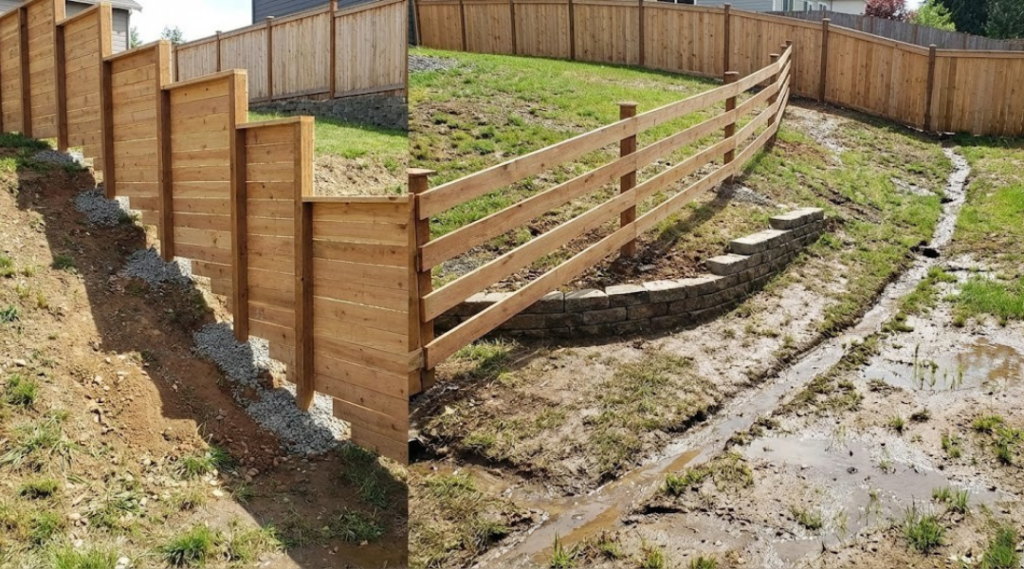
In areas with significant elevation changes, you may need a retaining wall to stabilize soil. Some jurisdictions regulate retaining walls above certain heights, so verify local rules before construction. Installing drainage channels, gravel backfill, or small swales helps maintain both slope stability and fence durability.
Underground And Overhead Utility Considerations
Before digging post holes, always contact the local utility locator service. Utility companies mark underground lines such as electric, gas, and water. Striking one during excavation can cause serious injury or service disruption.
Respect existing utility easements—designated areas where companies have access to maintain infrastructure. You generally cannot place a permanent fence across these easements, though you might install removable panels or gates if allowed.
Also, look upward. Overhead utility lines require safe clearances from tall posts or materials. Metal fences should stay well away from power lines to prevent electrical hazards. Keep a record of utilities shown on your property survey to avoid issues during installation or future maintenance.
How To Evaluate A Property Before Marking Fence Posts
Careful evaluation helps you mark post locations accurately, avoid boundary conflicts, and prevent damage to underground systems. You should confirm your legal lot limits, check how the land handles water, and verify that buried utilities are clearly marked before starting any fence construction.
Reviewing Surveys, Plats, And Visible Markers
Start by locating your property deed, plat map, or a recent property survey. These references identify legal boundaries and existing easements. If you are unsure about their accuracy, hire a licensed surveyor to confirm measurements and mark stakes or flags along the correct line.
Use a tape measure, string, and spray paint to note potential fence locations based on the survey’s data. Walk the boundary to find visible corner pins or marker stakes that often sit a few inches below the surface. Compare these to your plat or survey map before you begin installing a fence.
If old fences or landscape edges differ from the official survey, always trust the professional record. Disputes often arise from relying on outdated or visual boundaries, so make sure your fence installation follows the verified line.
| Resource | Purpose | Where to Obtain |
|---|---|---|
| Plat Map | Visual layout of property | County assessor’s or recorder’s office |
| Survey Report | Legal boundary measurements | Licensed land surveyor |
| Boundary Stakes | Ground reference for fence layout | Installed during professional survey |
Observing Terrain Behavior After Rain Or Grading
Pay attention to how your ground holds and drains water. After a rain, walk the property and look for puddles, erosion channels, or slope movement. These areas can weaken post foundations if not stabilized before building a fence.
Use stakes and string lines to outline the intended fence path while checking for uneven ground. Measure slope changes with a tape measure or leveling tool to decide whether posts need to be stepped or leveled. A gradual grade may require adjusting fence construction spacing to keep rails straight.
Grading work, such as adding fill or compacting soil, can shift your previous boundary markers. Recheck with your survey stakes or plat map if any surface changes occurred after grading. Proper slope observation prevents future tilting or drainage problems along the fence line.
Coordinating Utility Location And Clearance
Before driving any post or digging, always call 811 to request underground utility marking. Utility companies will send technicians to mark gas, electric, water, and communication lines with colored paint or stakes. Wait for confirmation before any excavation.
Keep a distance of at least 18 to 24 inches from these marks when installing a fence. Use spray paint or string to indicate safe digging zones across the property. This precaution prevents injury, fines, and service interruption.
If the planned fence crosses areas with dense utilities, consult your professional surveyor or local building office for guidance. They can confirm right-of-way limits and help you maintain required clearances. Following regulations ensures your fence construction remains both safe and compliant with local codes.
Common Fence Line Approaches And When Each Is Used
Choosing how to position your fence affects privacy, cost, and legal compliance. Placement also determines how well the fence works with features like slopes, shared boundaries, and utility easements.
Following True Property Lines
Placing a fence directly on the property line defines clear ownership and maximizes usable space. This type of boundary fence is often shared between neighbors, who may split costs and maintenance.
To follow the true property line, you usually need a recent land survey or official map. A surveyor marks points that ensure your fence sits exactly where your property ends. Fences placed without this step risk crossing into a neighbor’s land, which may lead to disputes or forced relocation later.
Many municipalities regulate fence setbacks, especially near sidewalks or roadways. Urban or suburban lots often require a small setback, while boundary fences between private yards may sit right on the line. Always check local zoning rules or HOA guidelines to verify where a structure can go.
When done properly, property line fences establish a clear and lasting divider that respects both properties and meets legal standards.
Offsetting Fences To Avoid Disputes Or Easements
An offset fence sits slightly inside your property rather than on the edge. Offsetting is common where easements, retaining walls, or irregular boundaries make line placement risky. This approach provides a visible buffer zone and prevents claims of encroachment.
In many areas, easements grant access to utility lines or drainage systems. If you build over one, it can cause costly repairs later when access is needed. Offsetting the fence a few inches—or sometimes a few feet—keeps the installation legal and allows room for maintenance.
This method also helps avoid neighbor conflicts. When your fence is fully on your land, there’s little question about who maintains or owns it. While you may give up a narrow strip of space, the reduced risk of legal or maintenance issues often makes the setback worthwhile.
Stepping Versus Racking On Sloped Ground
On sloped lots, you need to adapt the fence to match the grade. The two main methods are stepping and racking. Both keep panels stable while maintaining a consistent top line and proper ground clearance.
Stepping uses level sections that move down or up in visible drops, similar to stairs. This works best with rigid materials like vinyl or wood panels. It gives a crisp, structured look but can leave small gaps under each panel on steeper slopes.

Racking angles the panels so rails follow the slope smoothly. Metal or flexible wood fences often use this style. It offers a more continuous appearance and better ground coverage but may cost more due to custom fabrication.
Choose your method based on slope angle, material type, and the visual effect you want. Both designs provide a stable, secure layout that maintains the property’s natural shape.
Why Standard Fence Layouts Often Cause Problems
Standard fence layouts often create issues when they rely on rough visual alignment or ignore buried and above-ground utility lines. Measuring and planning with attention to property boundaries, access zones, and fencing regulations helps prevent placement errors and costly rework later.
Relying On Visual Estimates Instead Of Measurements
Many homeowners assume the property line follows visible features such as existing fences, tree lines, or curbs. In reality, boundary lines can shift due to older surveys or unclear subdivision maps. When you build based on what looks right, your fence can cross onto neighboring land, violating property line fence rules and residential setbacks.
Surveys provide the only reliable way to confirm legal boundaries. Without them, even a few inches of misplacement can lead to disputes or force you to relocate the fence. This becomes especially important where fencing regulations set minimum distances from sidewalks, easements, or drainage rights-of-way.
Local fence laws also set restrictions on fence height limits near streets or driveways for visibility. A misaligned fence may not just create conflict with neighbors—it can also violate fence regulations that require permits or inspections before installation. Always stake the line using official survey markers rather than estimating by eye.
Ignoring Utility Corridors Or Access Needs
Utility corridors often run through side yards or along rear property edges. Placing a fence over these zones can block maintenance crews or cause damage if underground lines need repair. Gas, water, and electrical services typically require a clear access width, which you must keep unobstructed under local fence regulations.
Missing these corridors can lead to delays or forced removal. Before installation, contact your local utility marking service to identify underground routes. Marking these areas helps plan proper gate placement, especially where equipment or utilities need access.
Keep at least a few feet of clearance from major fixtures like air-conditioning units and service boxes. Doing so ensures safe maintenance without breaching setback or utility access requirements. By accounting for access needs early, you reduce safety risks and avoid unnecessary fence modifications.
Questions, Misconceptions, And Edge Conditions
Fence placement often raises confusion about property limits, ownership, and future yard plans. It’s important to base decisions on verified boundaries, sound communication, and awareness of features like drainage, walls, and plants that can shift over time.
Whether Fences Must Sit Exactly On Property Lines
A fence does not always need to sit directly on the property line. In most areas, you can place it a few inches or feet inside your boundary to avoid future fence disputes or encroachment claims. Local zoning rules and HOA policies may require specific setbacks, especially near streets, driveways, or corner lots.
Placing the fence slightly inside your line also simplifies maintenance because you can reach both sides without stepping onto a neighbor’s land. However, if you intend the fence to serve as a shared boundary, most areas require that you and the neighbor agree in writing before building. That agreement helps prevent misunderstandings and protects both property values.
Check before digging. Survey markers, plats, or a recent property survey clarify your actual boundary. Building based on guesswork is risky and can trigger costly neighbor disputes or legal corrections later.
Handling Shared Boundaries With Neighbors
When two properties share a boundary fence, communication matters more than anything else. Speak with your neighbor early about materials, height, cost sharing, and which way the finished side will face. Many towns require the “good” or finished side to face outward toward the street or neighbor for better curb appeal.
A short written agreement helps if ownership changes later. It should list the fence’s position, shared maintenance duties, and any height or style limits. That documentation prevents confusion if repair costs arise or rules shift.
If your neighbor disagrees about placement, pause before starting work. A neutral surveyor can confirm the line and keep the project factual, not personal. Clear steps like these reduce fence disputes and maintain good relationships next door.
Planning Around Future Landscaping Or Hardscape Changes
Fences often interact with slopes, gardens, patios, and retaining walls. Plan the layout so water drains properly and new hardscapes will not cause pressure against posts. Avoid blocking swales or covering drainage areas. Every structure in the yard—from raised beds to new driveways—can affect runoff toward or away from your fence line.
Consider how plants may grow over time. Hedges, trees, or vines too close to the fence can cause discoloration, warping, or even structural strain. Leave a gap for trimming and airflow. Think about property value and design consistency too; a well-aligned fence that matches landscaping improves appearance and adds functional space.
Tip:
| Planning Factor | Why It Matters |
|---|---|
| Drainage Path | Prevents pooling and soil erosion |
| Root Spread | Reduces future maintenance work |
| Patio or Pool Area | Ensures proper setback and safety clearance |
Smart spacing and early planning protect your investment, keep the fence stable, and maintain a neat, accessible yard.
Final Considerations Before Committing To A Fence Layout
Before finalizing your fence layout, verify every measurement and assumption to avoid extra costs, corrections, or disputes. Professional help can clarify unclear property lines, slope challenges, and code requirements that aren’t obvious on paper.
Rechecking Assumptions Before Materials Are Ordered
Before purchasing supplies, check your property boundaries, utility locations, and slope grades again. Many layout issues result from small errors in measurement. A fence built a few inches over a line could lead to removal or legal disputes. Review your survey map or hire a surveyor if markers are missing or hard to locate.
Walk the planned line with a measuring tape and stakes to confirm spacing for posts and gates. Pay attention to grade changes that may require stepped panels or longer posts. If using a string line, make sure it follows the contour of the land rather than cutting across uneven ground.
Also, confirm permit conditions and setback distances, as local codes may limit fence height or placement near sidewalks or easements. Once you confirm these details, double-check your material list for proper post lengths, hardware types, and gate widths. This step prevents delays or shortages during installation.
Knowing When Professional Input Is Necessary
Some fence layouts seem simple but hide complex conditions. If the property line is unclear or involves shared boundaries, a licensed surveyor can legally confirm the limits. This documentation prevents future disputes.
If the terrain includes steep slopes, multiple levels, or drainage features, consult a fence contractor or landscape professional. They can recommend step-down or racked fence designs that fit the grade and maintain durability.
In areas with buried utilities, always call 811 or your local locating service before you dig. They will mark underground lines that could pose safety or legal risks. For tricky soil conditions, such as sand or clay, professional advice on post depth and concrete setting ensures the fence remains stable for years.