

When a fence starts to sag, lean, or twist out of line, it signals more than surface wear—it points to problems at the foundation of the structure. Post movement, soil shifts, or changes in hardware tension can quietly weaken what once stood straight and secure. By learning how to identify and correct sagging, warping, leaning posts, and gate misalignment, you can restore both stability and appearance before minor issues turn into costly replacements.
You’ll see how each component—posts, panels, and gates—affects the rest of the system. Patterns across wood, vinyl, and metal materials reveal why some fences fail faster or respond differently to stress. With the right diagnostic approach, you can trace visible flaws back to their root causes and decide whether to reinforce, reset, or rebuild.
This guide also explores the tradeoffs of different repair methods and how material supply networks influence your long-term maintenance options. Whether you manage a single property or support multiple job sites, understanding these structural relationships helps you make practical repair choices that protect durability and value.
Failure Patterns Across Fence Materials And Installations
Different fence materials fail in distinct ways, often due to how they respond to stress, moisture, and temperature changes. Understanding material behavior and load transfer helps you identify why leaning, sagging, or gate misalignment happens before damage spreads.
Wood Movement, Metal Fatigue, And Vinyl Deformation
Wood reacts to moisture and temperature fluctuations. Expansion, contraction, and uneven drying cause warping, cracking, and leaning over time. Poor sealing or improper post depth can speed up this deterioration, especially when posts absorb water near ground level.
Common failure modes in wood fences:
| Issue | Likely Cause | Prevention Tip |
|---|---|---|
| Warping boards | Uneven drying & grain orientation | Use kiln-dried lumber, seal end grain |
| Leaning posts | Shallow holes, saturated soil | Set posts below frost line, improve drainage |
| Sagging rails | Decay or weak fasteners | Use galvanized connectors |
Metal fences, such as aluminum or steel, behave differently. Aluminum resists rust but can flex under repeated stress or strong winds, which leads to metal fatigue around joints. Steel posts stay strong longer but can corrode if coatings fail, causing uneven support and leaning.
Vinyl fences deform when exposed to thermal expansion or heavy loads. In hot weather, panels may bow outward, while cold makes them brittle. Reinforced rails and UV-stabilized formulations reduce these risks and maintain shape during seasonal changes.
Load Distribution Differences In Panels, Posts, And Gates
Each fence system transfers loads differently. A wood panel distributes weight unevenly along rails, making weak fasteners or rot-prone joints prone to sagging. If post spacing exceeds design limits, the structure begins to flex and lean.
Metal and aluminum fences rely on anchored posts and welded or bolted joints. When one post loosens or its footing shifts, stress moves to adjoining sections, often making the entire run tilt. Rigid panels can amplify this imbalance because they don’t absorb impact or ground changes easily.
Gates fail when hinges or latches lose alignment under repeated cycles of movement. The combined weight of the gate and hardware focuses force on one post, accelerating post tilt and hinge sag. Using adjustable hinges, proper bracing, and concrete footings ensures load is spread evenly across components, preventing gradual misalignment.
Diagnosing Root Causes Behind Visible Fence Issues
Visible fence problems often start with hidden structural or environmental changes. Weak soil support, shifting ground, or worn hardware can gradually cause a leaning post, sagging panels, or gate misalignment. Identifying the source helps you make repairs that last instead of temporary fixes.
Soil Movement, Drainage, And Post Stability Factors
Soil conditions play a major role in fence stability. When soil becomes saturated or erodes, it can loosen a post’s base and cause it to tilt. Clay soils expand with moisture and contract when dry, creating gaps that leave posts unstable. Sandy soil drains faster but can also wash away support after heavy rainfall.
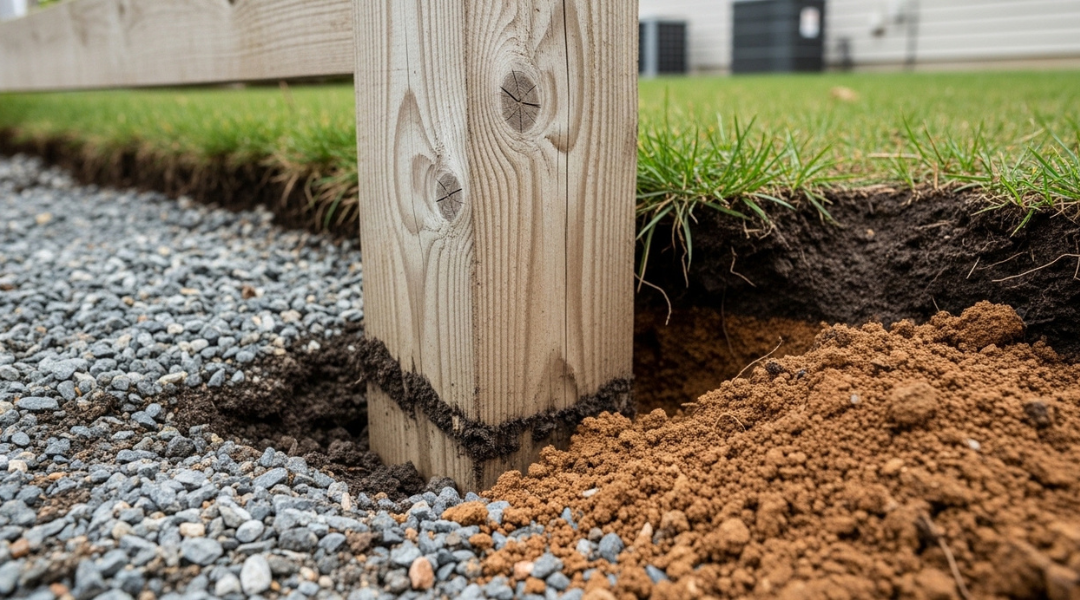
You can spot soil movement by looking for gaps around the post or uneven ground along the fence line. Check whether the base of each damaged fence post sits deep enough—at least one-third of its length should be buried for stability.
Use compacted gravel or concrete to add strength to weak posts. Proper drainage helps prevent recurring problems. Slope the ground slightly away from each post to keep water from pooling. Regular inspection after storms helps you catch early signs of leaning before full replacement becomes necessary.
Hardware Stress, Fastener Failure, And Joint Fatigue
Hardware wear can cause a fence to shift or sag even when the posts remain solid. Rusted screws, broken brackets, or stretched hinges often show the first signs of weakness. Over time, vibration, wind, and temperature swings loosen fasteners and let panels move slightly out of alignment.
Inspect hinges, screws, and connecting joints around gates and panels. Look for loose bolts, bent metal, or stripped threads. A leaning post may still appear stable but pull nearby joints out of square.
Replace corroded hardware with galvanized or stainless steel components to reduce future rust. Reinforce high-stress points—such as gate hinges—with extra brackets or corner braces. Tightening and lubricating parts during seasonal maintenance helps prevent uneven pressure that leads to joint fatigue and sagging panels.
Structural Relationships Between Posts, Panels, And Gates
A fence’s strength and appearance depend on how well its posts, panels, and gates share weight and maintain alignment. Problems like a sagging gate or warped panels often start with poor balance in how these parts connect and support each other.
Load Transfer From Gate Weight To Hinge Posts
Every gate transfers its weight to the hinge post through the hinges and frame. When the post is not deep enough in the ground or the concrete footing is weak, that weight causes the post to tilt. Over time, even a small lean can make the gate sag or scrape the ground.
You should use pressure-treated or metal posts set at least 30 to 36 inches deep, depending on soil conditions. Compact gravel at the base improves drainage and prevents shifting after rain.
Adding a diagonal brace or tension cable between the top hinge and opposite lower corner helps distribute weight evenly. This reduces twisting stress on the hinge post. Checking hinge screws and adding washers when needed can also prevent looseness.
| Gate Type | Typical Stress Area | Reinforcement Tip |
|---|---|---|
| Wooden | Lower hinge post | Install metal brackets |
| Vinyl | Both hinges | Use steel inserts |
| Metal | Top hinge | Add cross-brace |
Proper support keeps hinge posts stable, which limits sagging and extends gate life.
Panel Alignment Dependencies On Post Spacing Accuracy
Fence panels rely on accurate post placement to stay flat and aligned. If the distance between posts varies by even an inch, the panels may warp or strain at the joints. This creates uneven pressure that can loosen nails or cause cracks.
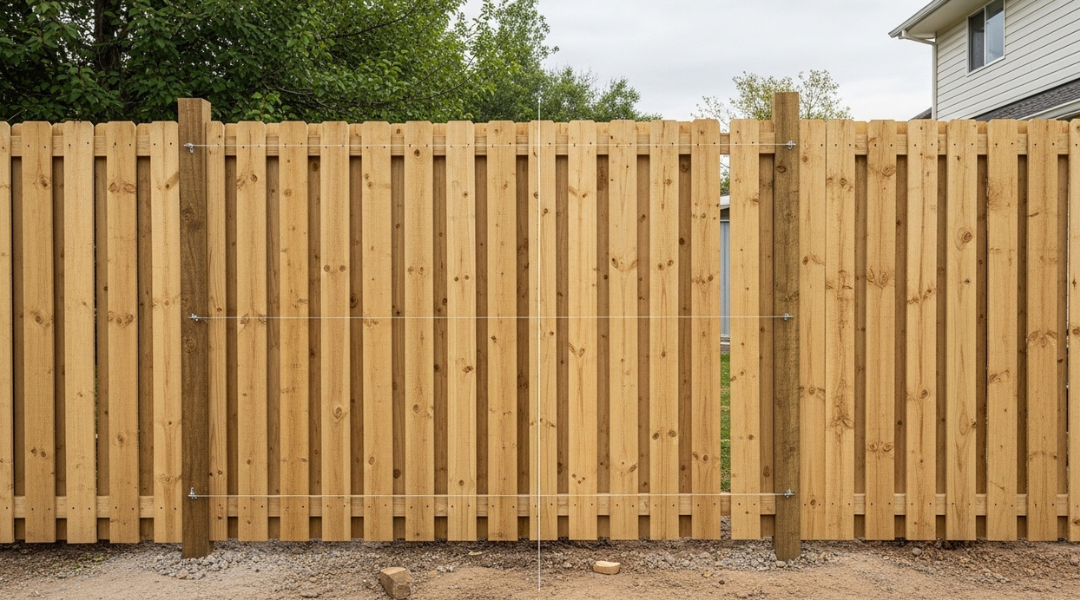
Use a measuring tape and string line to set consistent spacing before installing panels. Checking vertical and horizontal alignment with a post level helps prevent drift as you work.
When panels attach to leaning posts, their top edges may appear wavy or uneven. Rechecking alignment after the concrete cures ensures everything remains square.
In windy areas, evenly spaced posts also balance load transfer across the fence. This reduces side pressure that causes panels to bow or separate over time.
Tradeoffs In Repair Approaches And Long-Term Stability
Repair decisions often weigh short-term convenience against lasting structural stability. You need to balance cost, disruption, and service life extension while understanding the physical limits of materials and connection hardware in use.
Temporary Corrections Vs Structural Remediation Outcomes
Temporary adjustments can make a leaning post or sagging gate functional again without solving the root problem. Examples include tightening a turnbuckle on a tension cable or adding metal brackets to pull a warped frame into alignment. These measures reduce immediate movement but often depend on the strength and placement of existing materials.
Long-term remediation, on the other hand, focuses on addressing causes like soil settlement, corrosion, or frame deformation. Structural fixes may involve replacing damaged supports, resetting footings, or installing new anchor points. These actions require more time and cost but improve lasting stability.
When deciding between quick repairs and full remediation, consider inspection data, load demands, and how long you expect the structure to perform before replacement. A simple table can help guide analysis:
| Approach | Cost | Longevity | Risk Level |
|---|---|---|---|
| Temporary correction | Low | Short-term | Higher (recurrence likely) |
| Structural remediation | Higher | Long-term | Lower (root cause addressed) |
Material Replacement Vs Reinforcement Decision Logic
Choosing between replacing or reinforcing depends on the remaining service life of existing posts and frames. If the metal or wood has visible cracks, distortion, or corrosion, reinforcement like steel sleeves, angle brackets, or extra cross-bracing may only delay failure. You should evaluate structure type, load exposure, and the compatibility of reinforcement materials.
Replacement becomes more practical when deterioration has advanced, or when upgrades to alignment and load capacity are needed. Reinforcement works best when the base materials are still sound and only minor adjustment is required.
Use inspection data to measure extent of decay, alignment offset, and hardware fatigue. A careful comparison of current condition and anticipated performance helps you invest in the right balance of cost efficiency and structural reliability.
Material Availability Constraints In Multi-Branch Supply Networks
Material flow and stock consistency affect how quickly you can correct post alignment and gate fit issues. Limited supply flexibility often leads to longer service times, uneven quality, and cost variations between locations.
Standardized Vs Custom Components Across California Yards
When your network spans multiple California yards, the balance between standardized components and custom parts determines how smoothly repairs progress. Standardized parts—like uniform hinges, bolts, and post caps—allow bulk purchasing and faster restocking. You can source them from several suppliers, which reduces downtime when a single site runs low.
Custom components, however, pose risks. Specialized gate brackets, proprietary fasteners, or wood treated to a unique formula may depend on one or two vendors. Lead times rise when that vendor faces production delays or raw material shortages. The difference between a two-day delay and a two-week delay can determine whether a yard meets project deadlines.
Maintaining a shared component catalog across branches helps limit variation while keeping design standards intact. Many organizations track part usage rates in simple tables such as:
| Component Type | Source Options | Average Lead Time | Risk Level |
|---|---|---|---|
| Common hinge | 4 vendors | 3 days | Low |
| Treated cedar post | 2 vendors | 7 days | Medium |
| Custom latch fitting | 1 vendor | 14 days | High |
Regular reviews of these metrics help you spot which items need alternate sources before shortages affect field teams.
How Inventory Access Shapes Repair Feasibility And Timelines
The ability to access materials quickly often dictates how soon a field team can correct sagging or leaning posts. If one branch lacks core items—like replacement screws or bracket assemblies—you may have to transfer stock from another yard. This process adds cost and time, especially when branches sit far apart.
Real-time inventory visibility makes scheduling easier. When you see that your inland yard holds surplus fence posts while coastal yards face shortages, you can authorize a redistribution before a project stalls. Systems that update stock counts daily help track supply-use patterns and support accurate reorder points.
Delays often occur because reorder thresholds are set too narrow or communication between purchasing teams is slow. By adjusting restock levels and aligning procurement schedules with high-demand seasons, you reduce last-minute scrambles for parts. Access planning, paired with consistent supplier performance reviews, helps keep repair timelines predictable across your entire network.