

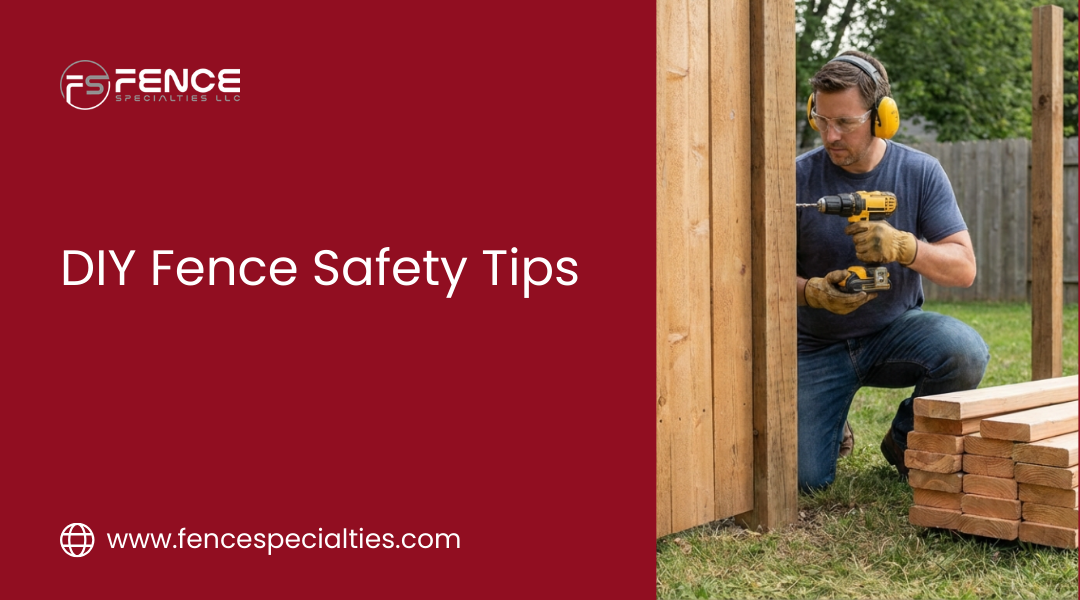
Building your own fence can save money and give you control over your project, but it also puts you in charge of your own safety. Many DIY builders focus on measurements and materials while overlooking the risks that come with digging, lifting, cutting, and working with heavy posts and panels. Wearing the right personal protective equipment and following basic jobsite practices can prevent most common fence-building injuries, from cuts and splinters to more serious accidents involving power tools and underground utilities.
You don’t need a professional crew to build safely. Understanding which hazards exist at each stage of your project and preparing for them before you start work will help you finish without injury or costly mistakes. This guide walks you through practical risk boundaries, task-specific gear, material handling challenges, and real-world safety patterns that keep both contractors and homeowners protected.
Whether you’re setting a few posts or installing an entire perimeter, the choices you make about equipment and setup affect how smoothly your project goes. The insights shared here draw from decades of fence supply experience and proven safety principles that apply to any backyard build.
Defining DIY Fence Jobsite Risk Boundaries
Not all fence installation work carries the same level of risk, and knowing where your DIY project crosses into professional territory protects both your safety and legal liability. Underground utilities, complex terrain, and certain technical tasks require specialized knowledge that goes beyond basic home fencing skills.
Tasks Covered Within Typical Residential Builds
Most residential fence installation projects involve standard activities that you can safely handle with proper preparation. These include measuring and marking fence lines, digging post holes with manual tools or rental equipment, mixing and pouring concrete for posts, and assembling pre-cut fence panels or pickets.
You can also manage basic grading work around fence posts, installing gate hardware, and applying stains or sealants to finished sections. A solid safety plan for these tasks should include proper lifting techniques, tool safety protocols, and appropriate personal protective equipment.
Standard DIY fence tasks:
- Setting wooden or vinyl fence posts in concrete
- Attaching rails and pickets to installed posts
- Installing residential-grade chain link fabric
- Basic trimming and leveling of uneven ground
- Painting or staining completed fence sections
Activities Requiring Licensed Trade Involvement
Certain aspects of fence installation demand professional expertise to maintain construction site safety and code compliance. Any work involving electrical systems requires a licensed electrician, including installing outlets for automatic gates or security lighting along your fence line.
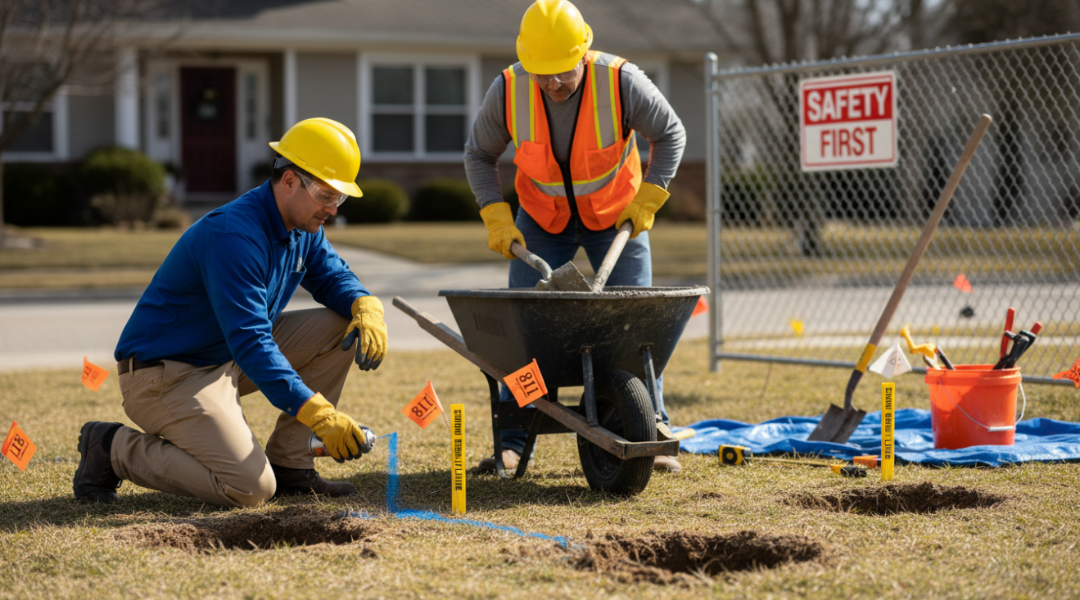
You must call before you dig by contacting 811 at least two business days before excavation. This free service marks underground utilities like gas lines, electrical cables, water pipes, and telecommunications infrastructure. Hitting these during fence installation creates serious safety hazards and expensive damages.
Licensed contractors should handle installations near property easements, rights-of-way, or when your fence requires structural engineering calculations. Concrete work beyond simple post setting, such as building retaining walls as part of your fence system, often requires professional assessment.
When Property Conditions Elevate Risk
Specific site conditions transform straightforward fence installation into higher-risk projects requiring extra precautions or professional help. Slopes exceeding 15 degrees create stability challenges and increase fall risks during post installation and panel attachment.
Rocky or heavily compacted soil may need specialized excavation equipment beyond consumer-grade post hole diggers. Properties with confirmed underground utilities within three feet of your planned fence line require hand digging rather than powered augers to prevent utility strikes.
Sites with poor drainage or standing water need soil analysis before setting posts to prevent premature fence failure. Construction safety protocols become more critical when working near structures, power lines within ten feet of your fence line, or alongside roadways with vehicle traffic.
Your local building department can identify additional risk factors specific to your property during the permit review process. Some jurisdictions require soil tests, engineering stamps, or special foundation designs based on local conditions like frost depth or seismic activity.
Personal Protective Equipment by Task
Different fence building tasks expose you to specific hazards that require targeted protection. Selecting the right PPE for cutting, drilling, digging, and post installation ensures you stay safe throughout your project.
Eye and Face Protection During Cutting
Safety glasses with side shields are essential when cutting fence boards, posts, or metal materials. Flying wood chips, metal fragments, and sawdust can cause serious eye injuries if your eyes aren’t properly protected.
Upgrade to safety goggles when cutting pressure-treated lumber or using chemical treatments. Goggles create a seal around your eyes that prevents dust and chemical splashes from entering. Standard safety glasses leave gaps where particles can enter.
Face shields provide additional protection when using angle grinders or cutting metal fence components. Metal sparks can reach exposed skin on your face and neck. Wear a face shield over your safety glasses for complete coverage during high-risk cutting operations.
Hearing and Respiratory Considerations
Power tools used in fence building create noise levels that damage your hearing over time. Circular saws, miter saws, and post hole augers often exceed 85 decibels. Wear earplugs or earmuffs whenever you operate power equipment for extended periods.
Respirators protect your lungs when cutting pressure-treated wood or working in dusty conditions. Pressure-treated lumber contains chemicals that become airborne during cutting. Use an N95 respirator or higher-rated mask to filter these particles.
Upgrade to a respirator with organic vapor cartridges when applying wood stains or sealants. These products release fumes that simple dust masks cannot filter. Work in well-ventilated areas and take breaks in fresh air.
Gloves, Footwear, and Fall Awareness
Work gloves prevent splinters, cuts, and blisters when handling lumber and hardware. Choose leather gloves for general fence building tasks. Switch to cut-resistant gloves when working with metal fencing or chain link materials.
Steel-toed boots protect your feet from dropped posts, tools, and bags of concrete mix. Fence posts weigh 20-50 pounds and can crush toes if dropped. Steel-toe boots with slip-resistant soles also prevent falls on uneven ground.
Fall protection becomes necessary when building fences taller than six feet. Use a sturdy ladder with someone spotting you from below. Never stand on fence posts or rails to reach higher sections.
Material Handling and Equipment Hazards
Fence building involves moving heavy posts, handling bulky panels, and operating powerful tools that create specific risks. Back injuries from improper lifting and tool-related accidents are the most common hazards you’ll face during a DIY fence installation.
Lifting Posts, Panels, and Concrete Safely
Fence posts often weigh 30-50 pounds each, while panels can exceed 70 pounds. Your back handles this weight through your spine, which acts like a crane that wasn’t designed for improper angles.
Use proper lifting techniques every time. Bend at your knees, not your waist. Keep the load close to your body. Grip the post or panel firmly with both hands before you stand up. If you need to turn, move your feet instead of twisting your spine.
Safe lifting checklist:
- Test the weight before fully committing to the lift
- Ask for help with loads over 50 pounds
- Use a wheelbarrow or hand truck for multiple posts
- Wear steel-toed boots to protect against dropped materials
Concrete bags present a unique challenge at 60-80 pounds each. Always carry these at waist height with your arms bent. Set up your mixing area close to where you’ll pour to minimize carrying distance with wet concrete.
Power Tool Interaction With Fencing Materials
Post hole diggers and power augers create torque that can wrench your arms or throw you off balance if they hit rocks or roots. Keep both hands on the handles at all times. Stand with your feet shoulder-width apart for stability.
Circular saws cutting through pressure-treated wood kick up chemical-laden dust. Wear safety glasses and a dust mask rated N95 or higher. The blade can bind in wet or twisted lumber, causing kickback that pulls the saw toward you.
Power tool safety measures:
- Inspect electrical cords for damage before each use
- Keep extension cords away from standing water
- Unplug tools when changing blades or bits
- Use GFCI outlets for all outdoor electrical work
Impact drivers can strip screws into fence panels with enough force to send the bit through your hand if it slips. Hold panels steady with clamps instead of your free hand.
Site Organization and Trip Prevention
Your work site becomes a maze of materials, tools, and holes. Post holes deeper than 2 feet require guardrails or covers when left unattended, especially overnight.
Stack fence panels flat on level ground, not leaning against structures where wind can knock them over. Keep a designated tool zone at least 6 feet from excavation areas. Rope off sections with holes using bright caution tape at knee height where people can see it.
Coiled extension cords and loose irrigation lines create trip hazards. Run cords along fence lines, not across walkways. Mark all underground utilities before you dig—even shallow post holes can hit electrical lines or gas pipes.
Interpreting Risk Versus Convenience
Building a fence yourself means constantly weighing quick shortcuts against real safety hazards. Understanding when speed creates danger helps you make better choices about protective gear and work methods during your project.
Time Savings Against Injury Probability
Skipping safety steps might save you 10 minutes now, but a single injury can cost you weeks of recovery time. When you rush through hazard identification, you miss obvious dangers like protruding nails, unstable ground, or overhead power lines.
Common time-saving risks include:
- Working without gloves to “feel the materials better”
- Skipping eye protection for “quick” cuts
- Standing on unstable surfaces instead of getting a proper ladder
- Lifting heavy posts alone to avoid waiting for help
A laceration from a saw blade takes seconds to happen but requires stitches, antibiotics, and work stoppage. The math is simple: 30 seconds to put on safety glasses prevents hours in an emergency room. Track the actual time PPE takes versus the recovery time from common fence-building injuries like splinters, cuts, or back strains.
Weather Exposure and Fatigue Factors
Heat, cold, and fatigue change your risk level throughout the day. Your coordination drops after three hours of physical work, making accidents more likely even if you’re doing the same task.
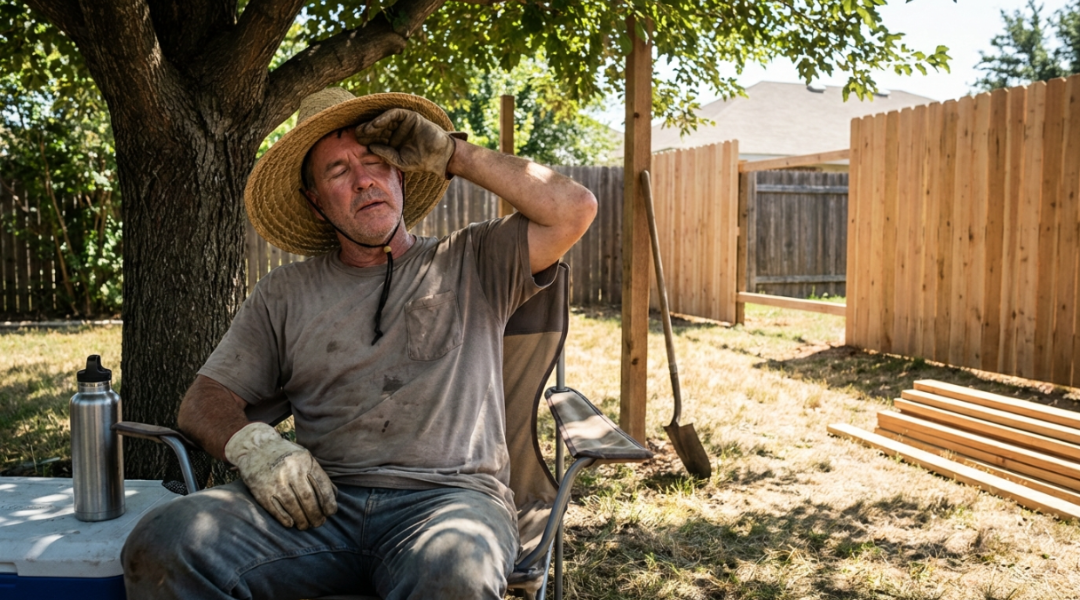
Direct sun exposure above 85°F increases injury risk by 20-30% as dehydration affects your judgment and reaction time. Cold weather below 50°F makes your hands less flexible, reducing your grip strength on tools.
Schedule demanding tasks like post-hole digging or concrete mixing during cooler morning hours. Take a 10-minute break every hour in the shade with water. If you’re squinting from sun glare or your fingers feel numb from cold, stop and address these conditions before continuing. Fatigue-related accidents spike in the final two hours of a work session.
Long-Term Physical Strain Considerations
Repetitive motions and awkward positions during fence installation create cumulative damage you won’t feel immediately. Bending at the waist 50 times to pick up boards stresses your lower back, even if each individual lift feels manageable.
Body strain patterns in fence work:
| Activity | Affected Area | Prevention Method |
|---|---|---|
| Post-hole digging | Shoulders, lower back | Use proper auger technique, switch sides |
| Concrete mixing | Wrists, elbows | Bend knees, use mechanical mixer |
| Panel attachment | Neck, upper back | Work at chest height when possible |
Your knees take significant impact when kneeling on hard ground for extended periods. Use knee pads every time, not just when it starts hurting. Wrist strain from repetitive hammer strikes or drill work shows up days later as tendonitis. Rotate between different tasks every 30-45 minutes to vary which muscle groups you’re using.
Safety Patterns Observed at Fence Specialties LLC in Riverside, California
Fence Specialties LLC operates in conditions that shape how materials are handled and how workers protect themselves on jobsites. The weight of common fencing materials, the intense heat of Riverside’s climate, and local contractor practices all set standards that DIYers should understand before starting their own projects.
Common Material Weights in Southern California Supply Yards
Vinyl fence panels typically weigh between 25 and 40 pounds per 6-foot section at Fence Specialties. Wood fence panels in similar dimensions range from 30 to 50 pounds depending on the wood type. Metal posts can weigh 15 to 30 pounds each.
Concrete bags for setting posts weigh 60 to 80 pounds. You should never lift these alone without proper technique. Bend at your knees and keep the bag close to your body. Many injuries happen when people try to carry too much at once.
Bulk material orders require additional planning. A pallet of fence panels can weigh 500 pounds or more. You need help unloading these items. Using a dolly or hand truck reduces strain on your back and shoulders.
Most supply yards store heavy materials on lower shelves to prevent overhead hazards. You should follow this pattern at home by keeping the heaviest items at waist height or below.
Heat and Sun Exposure in Riverside, California
Riverside temperatures regularly exceed 95°F from June through September. Heat exhaustion becomes a real risk during fence installation work. You need to start work early in the morning before 10 AM when possible.
Direct sun exposure requires specific protection. Wear a wide-brimmed hat and long sleeves made from light, breathable fabric. Apply sunscreen with SPF 30 or higher every two hours. Professional crews in Riverside take shade breaks every hour during peak heat.
Hydration matters more than most DIYers realize. Drink water every 15 to 20 minutes even if you don’t feel thirsty. Sports drinks help replace electrolytes lost through sweat. Keep a cooler with ice on the jobsite.
Watch for signs of heat stress including dizziness, nausea, or confusion. Stop work immediately if you experience these symptoms.
Contractor Jobsite Norms Influencing DIY Expectations
Professional fence installers in Riverside wear steel-toed boots and leather work gloves as standard equipment. You should do the same. Safety glasses are required when cutting materials or driving posts. Hard hats become necessary when working near structures or with tall fence sections.
Tool safety practices include unplugging power tools when changing blades or bits. Contractors keep extension cords away from water sources and walking paths. They mark underground utility lines before digging any postholes.
Work area barriers help keep family members and pets away from active construction zones. Professional crews use caution tape or temporary fencing. You can copy this practice by setting clear boundaries around your work area.
Most contractors work in pairs for tasks involving ladders or lifting heavy panels. This buddy system prevents many common accidents that happen when DIYers work alone.