


Living near the coast means dealing with salt air, heavy moisture, and constant sun exposure that wear down outdoor structures faster than expected. When you build or upgrade a patio cover, choosing materials and fasteners that can actually stand up to these conditions makes the difference between months of maintenance and years of dependable use. The best coastal patio covers combine corrosion‑resistant materials with marine‑grade fasteners designed to withstand salt exposure without weakening or staining.
Salt air is not just an occasional nuisance—it’s a constant environmental stress that targets every screw, joint, and coating. Aluminum and composite materials resist corrosion better than standard steel or untreated wood, but they still rely on the right hardware to stay secure. Using stainless steel, particularly 316‑grade fasteners, keeps connections strong even within a few miles of the shoreline.
With over 35 years of supplying California’s coastal builders, Fence Specialties LLC has seen how salt air can turn conventional outdoor materials into short‑term experiments. By understanding how moisture and salt interact with metals, finishes, and connectors, you can choose a patio cover system that lasts and looks good season after season.
When Salt Air Is The Real Problem, Not Age Or Installation
Coastal environments quickly expose weak points in materials that seem durable elsewhere. The persistent salt air creates chemical and physical wear that shortens the lifespan of patio covers long before normal aging or poor installation would. Understanding how this damage appears and what makes it worse helps you take corrective action before replacement becomes necessary.
Signs Your Patio Cover Is Failing Faster Than Expected
You may first notice white salt deposits or a powdery residue on metal fasteners and joints. These deposits form when moisture evaporates, leaving behind salts that corrode exposed parts. Over time, small rust spots on screws, brackets, or beams can spread beneath coatings, loosening joints and weakening structural integrity.
In wood structures, look for uneven discoloration, swelling, or rough texture. These changes result from salt moisture penetrating protective finishes and breaking down sealants. Even treated lumber can show signs of premature wear when constant exposure disrupts natural oils.
Composite and vinyl materials also show early deterioration. Edges may become brittle or chalky, and surface finishes can fade unevenly. Check hardware such as hinges and anchor bolts—they often reveal salt damage earlier than the visible surfaces. Keeping a short inspection checklist every few months helps identify these subtle shifts before serious failure occurs.
Coastal Exposure Factors That Change Material Performance
Salt air affects each material differently depending on humidity, wind direction, and particle concentration near the shore. High-salt zones within half a mile of the waterline see more rapid corrosion than inland areas. The combination of moisture cycling—alternating damp nights and dry days—traps salts in joints and seams where air circulation is limited.
These conditions accelerate oxidation on metals, even stainless steel if it’s a lower grade or not polished regularly. Aluminum can develop pitting corrosion, while galvanized coatings thin out after years of salt contact. Wood absorbs airborne salts, which pull moisture in and lead to swelling or decay.
Regular rinsing with fresh water and choosing marine-grade finishes can reduce buildup that compromises performance. The key factors—airborne salt concentration, condensation cycles, and the quality of protective coatings—determine how long your chosen materials and fasteners can resist salt damage before repairs become unavoidable.
How Coastal Environments Affect Patio Cover Systems
In coastal environments, salt-laden air, high humidity, and fluctuating temperatures accelerate wear on patio cover materials. Metals corrode faster, coatings break down sooner, and even synthetic finishes require specialized protection to remain stable over time.
Salt Air, Moisture Cycles, And Airborne Corrosion
Salt air carries microscopic chloride particles that settle on exposed surfaces. When moisture condenses, it dissolves these salts, forming an electrolyte that speeds up corrosion on metals and degrades unprotected finishes. This process occurs even when you don’t see visible salt buildup. Regular rinsing and corrosion-resistant coatings can slow it, but cannot eliminate it entirely.
Continuous wet-dry cycles make this problem worse. During humid or foggy periods, moisture activates corrosion. As conditions dry, the remaining salt concentrates, deepening surface pitting. Over months or years, this leads to blistering paint, rust streaks, and weakened structural connectors.
| Material | Common Reaction to Salt Air | Recommended Countermeasure |
|---|---|---|
| Aluminum | Forms surface oxidation; may pit | Use marine-grade alloy or anodized finish |
| Steel | Rapid rusting when coating fails | Apply zinc or powder coating; use stainless hardware |
| Wood | Swells, cracks, and traps salts | Seal with high-quality exterior finish |
| PVC/Composites | UV and salt film degradation | Choose UV-stabilized, ASA-capped versions |
Routine maintenance, including freshwater rinsing and inspection of fasteners, keeps your system performing longer in coastal climates.
Why Coastal Damage Looks Different Than Inland Wear
In coastal regions, materials face constant chemical and mechanical stress rather than simple weathering. You often see pitting in metals rather than the uniform rust typical inland. Fasteners might corrode from the inside out as saltwater creeps into thread joints, leading to sudden failures instead of gradual loosening.
Painted finishes can bubble or flake, not from poor application but from trapped salt expanding beneath coatings. Wood surfaces develop gray discoloration and grain lifting, caused by a mix of UV exposure and dissolved minerals. Even synthetic components can discolor as airborne salts react with surface layers.
These differences stem from airborne chlorides, cyclic moisture, and long-term saltwater exposure rather than steady oxidation. Understanding how these forces interact helps you choose cover materials—such as powder-coated aluminum, marine-grade stainless steel, or vinyl with UV stabilizers—that resist this distinctive coastal wear pattern.
A Practical Way To Evaluate Materials For Coastal Use
Salt exposure, moisture, and ultraviolet radiation create the toughest test for outdoor materials. You need to judge not only how well a product keeps its surface intact but also how its core structure and fasteners resist long-term deterioration from salt air and humidity.
Separating Surface Protection From Structural Durability
A shiny or sealed surface does not always mean the material will last. Protective coatings such as polyurethane, epoxy, or powder coatings guard against wear and oxidation, but if moisture penetrates beneath them, corrosion can start unseen. Focus on the bond quality between coating and substrate as well as how easily the finish can be renewed.
Durability depends on both the substrate material and the protective finish. For example, aluminum with a powder-coated layer offers strong surface protection but can pit when coatings break down near fasteners. In contrast, marine-grade stainless steel resists deeper corrosion even when its finish shows wear.
| Component | Typical Protection | Common Weakness |
|---|---|---|
| Aluminum (coated) | Powder or anodized finish | Pitting under scratches |
| Steel (galvanized) | Zinc barrier | Susceptible at cut edges |
| Wood (teak, ipe) | Natural oils or sealant | UV fading, surface checks |
When comparing materials, check how each handles both surface degradation and internal fatigue. A material that combines a stable base with a maintainable coating will outlast one that depends on finish alone.
Understanding Galvanic Reactions Between Dissimilar Materials
Corrosion often accelerates when unlike metals contact each other in the presence of salt water. This galvanic reaction creates an electrical path that corrodes the less noble metal. In a coastal patio cover, this typically happens at joints where fasteners meet framing parts made from different alloys.
To minimize galvanic effects, pair similar metals whenever possible—stainless steel fasteners with stainless structures or coated aluminum screws with aluminum framing. Isolate mixed materials using non-conductive washers, nylon spacers, or epoxy coatings on contact points.
You can use a simplified galvanic compatibility list to guide choices:
| Metal (Noble to Active) | Relative Reactivity |
|---|---|
| Titanium | Very Noble |
| Stainless Steel 316 | Low |
| Aluminum Alloy 6061 | Moderate |
| Carbon Steel | High |
Choosing components close in reactivity reduces current flow and corrosion speed. Regular inspections and a thin barrier of marine grease or protective coatings where contact occurs further slow galvanic action and extend hardware life.
Patio Cover Materials That Perform Better Near The Coast
Material choice directly affects how long your coastal patio cover lasts. Metals must resist corrosion, plastics must withstand UV exposure, and woods need proper treatment to slow decay from salt-laden moisture.
Aluminum Systems And Coating Considerations
You gain the most corrosion resistance with marine-grade aluminum. Its alloy composition and anodized or powder-coated finish guard against oxidation in salt air. Regular painted finishes do not offer the same protective depth and can chip, allowing corrosion beneath the film.
Powder coatings rated for coastal or industrial environments bond tightly to the metal and resist chalking from UV exposure. A coating thickness of at least 2.5 mils is generally recommended.
Use stainless steel fasteners—preferably grade 316—to prevent galvanic reactions between dissimilar metals. Where panels join framing, isolate contact points with plastic or rubber washers. These measures keep aluminum systems stable in coastal winds while reducing maintenance.
| Component | Recommended Material | Purpose |
|---|---|---|
| Frame | Marine-grade aluminum (6061-T6 or similar) | Structural rigidity and corrosion resistance |
| Coating | Polyester powder coat or anodized layer | Surface protection from salt and UV |
| Fasteners | Stainless steel 316 or nylon inserts | Prevent galvanic corrosion |
Vinyl Performance Limits In High-Sun Coastal Zones
Vinyl or PVC patio covers stop corrosion entirely, but they may degrade under heavy sun and heat. Prolonged ultraviolet exposure makes low-quality PVC brittle or discolored. Ensure you select UV-stabilized and impact-modified formulations to improve longevity.
The best vinyl systems include titanium dioxide additives to maintain color and prevent fading. Look for reinforced members using fiberglass cores or aluminum inserts, which increase strength against high winds.
Avoid low-cost vinyl parts joined by non-UV adhesives, as salt and sunlight can weaken the bonds within a few years. Clean surfaces periodically with mild detergent to remove salt buildup. Although vinyl performs well for low-maintenance use, it needs careful specification in bright, hot climates to extend service life.
Wood Species And Treatments That Resist Salt Exposure
Natural wood adds warmth to coastal patios, but it must resist rot and insects. Teak, ipe, and redwood have dense grain structures and natural oils that repel moisture and salt intrusion. For lighter structures, cedar offers moderate resistance with a lower weight.
Use pressure-treated wood meeting UC4A or UC4B standards for ground or partial saltwater contact. Avoid untreated lumber, which deteriorates rapidly in damp air. When possible, apply marine-grade sealant containing UV blockers and reapply every 2–3 years.
Synthetic alternatives like HDPE or recycled polyethylene composites mimic wood appearance and eliminate splintering. These materials do not absorb moisture but can expand in heat, so design joints with slight clearance. Proper hardware selection—stainless or hot-dipped galvanized—completes a system built to handle the coastal environment.
Fasteners, Hardware, And Connectors That Matter More Than The Frame
Salt air, humidity, and fluctuating moisture levels attack metal components faster than the framing materials around them. The strength and longevity of your patio cover depend on choosing fasteners and hardware that can resist corrosion, avoid galvanic reactions, and stay secure long after the first season.
Stainless Steel Grades And Where Each Is Appropriate
Not all stainless steel performs the same near coastlines. Type 304 stainless steel, often used inland, holds up moderately well in areas with light salt exposure but can pit or rust when regularly exposed to salt spray. Type 316, labeled “marine-grade,” contains added molybdenum for stronger resistance to chlorides and is the preferred choice for patios within several miles of the ocean.
When you install fasteners, match the grade of the screw, bolt, or connector to the environment’s corrosion level. Mixing stainless grades or combining stainless with another metal, such as galvanized steel, can create galvanic corrosion. In fully exposed coastal areas, use all Type 316 stainless components—from lag screws and washers to joist hangers and anchors—to maintain consistent protection.
Use the table below as a quick reference:
| Location / Exposure | Recommended Stainless Type | Notes |
|---|---|---|
| Within 3,000 ft of ocean | 316 (marine-grade) | Highest chloride resistance |
| 3,000–10,000 ft inland | 304 | Acceptable for partial exposure |
| Interior conditioned spaces | 304 or coated steel | Minimal salt presence |
Why Standard Galvanized Fasteners Often Fail Early
Standard galvanized steel fasteners rely on a zinc coating for corrosion resistance. In coastal air, that thin layer quickly wears away as salt and humidity break down the protective film. Once exposed, the steel underneath begins to rust, expanding and weakening the connection.
Even heavier hot-dip galvanizing offers only temporary protection when repeatedly exposed to salt spray. The constant wet-dry cycle deposits salt crystals that trap moisture and accelerate corrosion, especially in areas that rarely get rinsed by rain.
You may use proprietary coatings rated for marine or exterior exposure, but ensure compatibility between the coating on fasteners and connectors. Dissimilar materials can cause galvanic reactions that shorten service life. When in doubt, stainless steel offers the longest-lasting defense with minimal maintenance.
Hidden Connectors, Anchors, And Corrosion Traps
Hidden connectors and anchors used beneath decking or roof panels often face higher corrosion risk than visible parts. These spots collect salt, condensation, and debris, which stay damp longer and limit airflow. Areas under roof overhangs, covered decks, or screened enclosures tend to corrode faster because rain cannot rinse away the salt buildup.
Inspect concealed zones such as under-house storage areas, ledger fastenings, and post bases. Choose hardware with drain holes or open profiles to minimize moisture retention. When possible, use marine-grade stainless anchors or corrosion-resistant coatings designed for saltwater exposure.
Avoid pairing metals like aluminum connectors with stainless screws, which can produce galvanic corrosion. Consistent material selection and accessible installation for inspection help you identify and replace corroded parts before structural integrity declines.
Why Common “Outdoor-Rated” Solutions Often Fall Short
Many materials labeled for outdoor use fail when exposed to continuous salt air. Surface coatings, hardware finishes, and common fasteners often deteriorate faster than expected because they are tested for general weather, not marine conditions. Real coastal durability depends on how metals, sealants, and installation choices interact with salt-laden moisture.
Marketing Labels Vs Actual Coastal Performance
Manufacturers often apply “outdoor-rated” or “weather-resistant” labels based on inland testing standards that do not replicate saltwater exposure. In a coastal environment, even powder-coated steel or standard galvanized fasteners can start rusting within months. Salt crystals infiltrate microscopic coating cracks, pushing corrosion under paint or plating.

Use materials proven for marine settings instead of relying on retail labels. 316 stainless steel, marine-grade aluminum, and fiberglass-reinforced composites handle salt air better than ordinary galvanized or zinc-coated parts. Coastal builders also recommend nylon or polymer washers between dissimilar metals to stop galvanic reactions that occur when salty humidity conducts electricity between alloys.
A practical comparison helps clarify differences:
| Material Type | Typical Label | Coastal Durability | Common Failure Mode |
|---|---|---|---|
| Galvanized Steel | Outdoor-rated | Moderate to Poor | Surface rust, flaking |
| 304 Stainless Steel | Corrosion-resistant | Fair | Pitting in salty air |
| 316 Stainless Steel | Marine-grade | Excellent | Minimal corrosion |
| Aluminum (powder-coated) | Outdoor-rated | Good | Finish oxidation |
Installation Shortcuts That Accelerate Corrosion
Even durable materials fail early when installed incorrectly. Using mixed metal fasteners—like stainless screws in aluminum frames—creates galvanic corrosion, especially in salty conditions. Fasteners seize or fuse in place, trapping moisture and accelerating damage.
Improper sealing is another common problem. If you skip non-conductive barrier coatings or use the wrong sealant type, water infiltrates screw holes and starts corrosion behind trim. Loose or overtightened fasteners also strip protective coatings, exposing bare metal.
Routine steps prevent these issues:
- Pre-drill holes slightly larger than screws to avoid coating cracks.
- Apply a marine sealant rather than household silicone.
- Keep dissimilar metals separated by washers or gaskets.
Attention to small details at installation often determines whether your patio cover lasts five years or twenty.
Edge Cases And Regional Variables To Account For
Local conditions along the coast influence how your patio cover materials and fasteners perform over time. Factors such as salt density, wind exposure, and daily temperature swings determine whether a system remains secure or deteriorates prematurely. Careful evaluation of your site’s microclimate helps you select materials that truly withstand salt air.
Direct Oceanfront Vs Inland Coastal Neighborhoods
Homes situated directly on the oceanfront face continuous salt spray and high chloride levels that corrode metals quickly. Type 316 stainless steel or marine-grade aluminum fasteners perform best here, as they resist pitting and rust even when exposed to wind-driven saltwater. Plastic composites and high-density PVC trims also endure these harsh conditions with less maintenance.
In inland coastal neighborhoods, wind and moisture exposure reduce significantly. You can use Type 304 stainless or powder-coated galvanized fasteners that balance strength with cost efficiency. When selecting roofing materials for the patio cover, consider that inland zones still face high humidity and sporadic salt fog, so routine rinsing with fresh water extends component life.
| Location Type | Salt Exposure | Recommended Fastener Grade | Maintenance Frequency |
|---|---|---|---|
| Direct Oceanfront | Very High | 316 Stainless / Marine Aluminum | Monthly rinse |
| Within 2 miles inland | Moderate | 304 Stainless / Coated Steel | Every 3–4 months |
| Beyond 5 miles inland | Low | Galvanized or Coated | Seasonal check |
Covered Vs Open Patio Structures
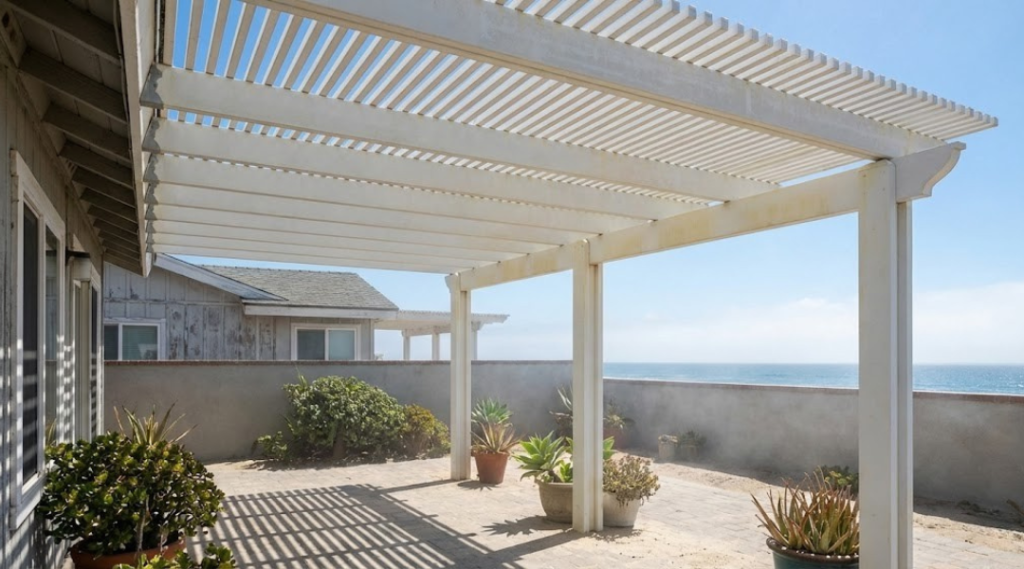
A covered patio provides partial protection from ocean breezes, limiting direct salt contact. Roof overhangs, pergola slats, or awnings reduce exposure but trap humidity, making ventilation gaps essential to prevent condensation-related corrosion. Use coated connectors that allow airflow around screw heads and joints.
Open structures, such as shade trellises or pergolas without solid roofing, experience greater wind uplift and salt accumulation. In these setups, use heavier gauge fasteners and die-cast brackets to prevent loosening during strong coastal gusts. Composite beams perform better than untreated wood here due to reduced swelling and warping from temperature fluctuations. Keeping fasteners slightly back from exposed edges lengthens their service life.
Mixing Old And New Materials In Coastal Retrofits
When upgrading existing patios in coastal construction, blending old and new materials demands close attention to galvanic compatibility. Joining stainless steel connectors to older galvanized posts or beams can accelerate corrosion through electrical potential differences. Always use isolation washers or barrier coatings where dissimilar metals meet.
Older treated lumber may contain copper-based preservatives that react adversely with modern fasteners. Replace any steel screws showing rust staining, and switch to polymer-coated or stainless alternatives. In retrofits near the ocean, check existing anchor points for salt creep beneath paint or sealants.
Temperature variations along the shoreline can cause expansion gaps to widen unevenly in aged framing. Include flexible joint sealants to maintain structural tightness as materials move under sun, wind, and moisture exposure.
Final Considerations Before Selecting Materials For Coastal Conditions
Coastal environments expose patio covers to salt-laden air, elevated humidity, and UV radiation, which each influence how long materials last and how often they need care. Choosing wisely requires evaluating how those conditions interact with structural components, finishes, and fasteners over time.
Balancing Longevity, Maintenance, And Material Compatibility
You should weigh material durability against how much regular maintenance you’re willing to perform. Aluminum and vinyl resist corrosion but may expand slightly in heat, while treated wood needs periodic sealing to avoid moisture damage. Hybrid products such as Alumawood® combine the look of timber with aluminum’s corrosion resistance, reducing long‑term upkeep.
A useful comparison tool:
| Material | Salt Resistance | Maintenance Level | Typical Lifespan |
|---|---|---|---|
| Aluminum | Excellent | Low | 20–30 years |
| Vinyl | Good | Low | 15–25 years |
| Wood | Fair | High | 10–20 years |
| Stainless Steel (fasteners) | Excellent | Low | 25+ years |
Confirm that coatings, paints, and fasteners are chemically compatible. Pairing galvanized screws with aluminum beams, for example, can cause galvanic corrosion. Matching finishes and selecting marine-grade hardware minimizes that risk and extends service life.
What To Reassess Before Committing To A System
Before finalizing, reassess exposure zones, orientation, and future maintenance access. Covered patios facing open water encounter heavier salt spray and may require powder‑coated or anodized materials rather than basic finishes. In contrast, inland coastal areas might allow lighter treatments.
Evaluate fastener placement and drainage design. Hidden bolts trap moisture if not ventilated, while open joints invite salt buildup. You should verify that sealants are UV-stable and that any connection points are accessible for periodic inspection.
Recheck manufacturer warranties and availability of replacement parts. Salt air shortens service intervals, so easy‑to‑source components simplify upkeep. Planning for this now helps keep your coastal patio system sound without unexpected repair delays.