

Chain link fencing remains one of the most cost-effective and practical options for securing property in California. The cost of chain link fence installation varies based on fence height, wire gauge, material finish, privacy slats, site conditions, labor requirements, and other project-specific factors. Understanding which factors drive the price can help you plan your project and compare options more accurately.
You’ll find that fence height directly affects cost, with taller fences requiring more material and labor. Wire gauge also plays a role—thicker wire offers greater durability but comes at a higher price. Privacy slats, coatings, and accessories can increase both cost and curb appeal, giving you flexibility to balance budget and function.
With more than 35 years serving California, Fence Specialties LLC supplies contractor-grade chain link materials at wholesale pricing while making them available to homeowners as well. Whether you’re in Riverside, Oceanside, San Jose, or Sacramento, you have access to same-day pickup and local delivery, making it easier to get the right materials without delay.
Why Chain Link Fence Pricing Matters In California
Chain link fence costs in California vary based on where you install them, what purpose they serve, and the materials you choose. Local demand, labor rates, and site conditions also play a direct role in how much you pay per foot.
Residential vs. Commercial Demand
The overall cost can vary depending on whether you need a fence for a home or a business. Residential fences often use lighter gauge wire and shorter heights, such as 4–6 feet, which generally require less material and installation work. Commercial projects usually require taller fences, like 8–12 feet, and heavier gauges for added strength, which can increase material and installation requirements.
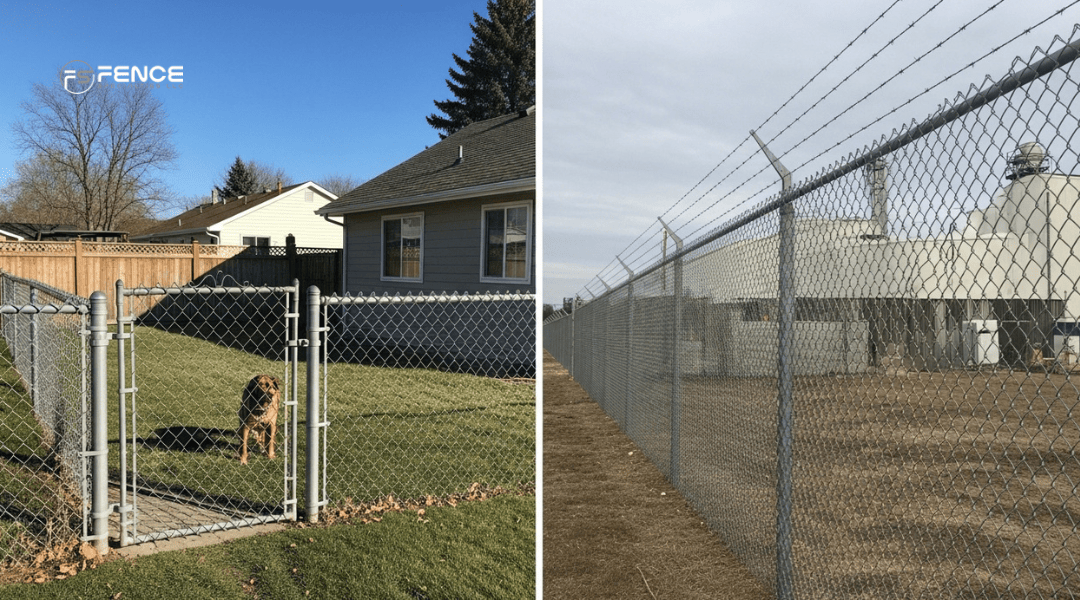
Security needs also affect demand. Homeowners often install chain link fences to contain pets or mark property lines, while businesses may prioritize perimeter security, vehicle access, or restricted areas. These requirements increase material use and labor time.
In California, urban areas with higher property density tend to see more residential installations, while industrial zones drive demand for commercial-grade fencing. This difference in demand directly influences per-foot pricing in each market.
Factors That Influence Cost Per Foot
Your final project cost depends on several measurable factors. Height is one of the most significant because taller fences require more material, stronger posts, and additional installation work. A 4-foot residential fence generally requires fewer materials and less structural support than a 10-foot commercial fence, while the latter may also require additional hardware or security features.
Material choice also changes pricing. Galvanized steel is typically a more economical option, while vinyl-coated chain link adds durability and color options and can increase the material cost. If you add privacy slats, the overall project cost will also increase based on the type, height, material, and coverage of the slats.
Labor rates in California are higher than the national average, especially in coastal and metropolitan areas. Site conditions—such as sloped terrain, hard soil, or removal of old fencing—can further increase installation costs.
By considering these factors, you can estimate your project more accurately and avoid unexpected expenses.
Core Cost Drivers Of Chain Link Fencing
The price of chain link fencing depends on the type of materials you choose, the labor conditions in your area, and the legal requirements tied to building codes and permits. Each of these factors directly affects the per-foot cost and should be considered before setting a budget.
Material Grade and Coatings (Galvanized, Vinyl-Coated)
The wire gauge and coating type determine both the durability and cost of your fence. Lighter gauges (such as 11.5 or 12) are less expensive but not as strong, while heavier gauges (like 9 or 6) increase strength and lifespan, raising the cost per foot.
Galvanized chain link is the most common and cost-effective option. It resists rust through a zinc coating and typically lasts 15–20 years with minimal maintenance. Prices remain lower compared to other finishes, making it a practical choice for residential uses.
Vinyl-coated chain link adds a protective PVC layer over galvanized steel. This option costs more but provides better corrosion resistance and a cleaner appearance. It comes in colors like black, green, or brown, which may be more acceptable to homeowners’ associations or city guidelines.
When comparing options, vinyl-coated fencing generally carries a higher material cost than standard galvanized options. The tradeoff is improved corrosion resistance, reduced maintenance, additional color options, and improved curb appeal.
Labor and Regional Installation Differences in California
Labor costs vary widely across California due to regional wage standards and contractor availability. In urban areas like San Jose or Sacramento, higher labor rates and demand for skilled installers can raise overall project costs. In smaller markets such as Riverside or Oceanside, you may find more competitive pricing.
Soil conditions also impact labor time. Rocky or clay-heavy soil requires more effort to set posts, which increases installation charges. Flat, sandy soil reduces labor intensity and can keep costs lower.
Installation labor in California varies depending on fence height, gauge, terrain, access, soil conditions, removal requirements, and the complexity of the project. Taller fences (6–8 feet) require more posts, deeper digging, and heavier material handling, which can increase labor hours and equipment requirements.
Local Codes and Permitting Considerations
You must account for local building codes and permit fees before installing a chain link fence. Many California cities regulate maximum fence heights, especially in front yards where limits often cap at 3–4 feet. Side and backyard fences may allow up to 6–8 feet but require city approval.
Permit requirements and fees vary by municipality. Some areas also require property line verification or neighbor notification before approval. Ignoring these steps can result in fines or forced removal of the fence.
If you plan to add privacy slats, some jurisdictions classify this as a “solid fence,” which can trigger different height restrictions. Always confirm the exact requirements with your local planning office to avoid unexpected costs and delays.
Chain Link Fence Heights And Their Cost Impact
The height of a chain link fence directly influences both its material requirements and installation cost. Shorter fences often fit residential needs, while taller options provide security for commercial or industrial sites.
Standard Residential Heights (3–6 Feet)
Most residential chain link fences range between 3 and 6 feet. These heights work well for enclosing yards, defining property lines, and keeping small pets contained. A 4-foot fence is often the most common choice for front yards, while 5 or 6 feet is more typical for backyards.
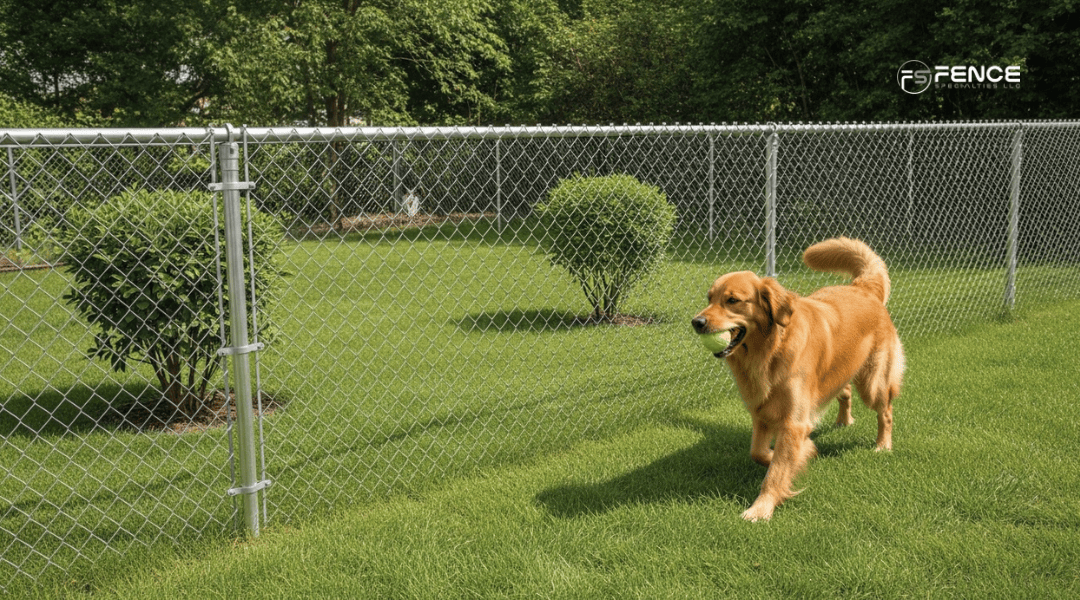
Costs stay lower at these heights because less steel mesh and fewer posts are required. You also avoid the need for heavy-duty posts or bracing. On average, shorter residential fences fall on the lower end of the per-foot price range in California.
You can expect to pay more per foot if you add privacy slats or upgrade to a heavier gauge wire. Still, at 3–6 feet, this type of fence remains one of the most affordable boundary solutions for homeowners.
Taller Commercial and Security Fencing (8–12 Feet)
Fences measuring 8 to 12 feet are typically used in commercial, industrial, or government settings. These heights are designed to deter unauthorized access, protect equipment, or secure sensitive areas.
The added height requires stronger framework. Posts are set deeper, and top rails or tension wires are often added for stability. This increases both material and labor costs.
In California, taller chain link fences often include barbed wire or razor wire extensions for added security. These features further raise the per-foot cost but are common in warehouses, utility sites, and restricted-access areas.
Compared to residential fencing, the price difference becomes clear. Taller fences not only use more mesh but also require thicker posts and professional-grade hardware.
When Height Directly Affects Price Per Foot
The cost per foot rises as height increases because of the additional linear feet of chain link fabric, taller posts, and more concrete for stability. Each extra foot of height adds measurable weight and stress to the structure.
For example:
| Fence Height | Typical Use | Cost Impact |
|---|---|---|
| 4 ft | Residential | Lowest per-foot cost |
| 6 ft | Yards/Pets | Moderate cost |
| 8 ft+ | Security | Higher per-foot cost |
You should also factor in local building codes. Some municipalities in California limit residential fence height, which can restrict your options and affect pricing.
By understanding how height changes material needs and installation complexity, you can better estimate the total project cost before purchasing supplies.
Wire Gauges Explained: Thickness And Durability
The thickness of chain link wire directly impacts how strong, secure, and long-lasting your fence will be. A lower gauge number means a thicker wire, which improves resistance to bending, cutting, and wear. Thinner wires cost less but may not hold up as well in high-traffic or high-security areas.
Common Gauges Used in California (9, 11, 11.5, etc.)
In California, the most common chain link wire gauges are 9, 11, and 11.5. These numbers represent the diameter of the wire in American Wire Gauge (AWG).
- 9 gauge: Thicker and stronger, often used for commercial or security fencing.
- 11 gauge: A mid-range option, common for residential yards.
- 11.5 gauge: Thinner, typically used for temporary fencing or budget-friendly projects.
You’ll also find 6 gauge in some high-security applications, though it’s less common for residential use due to its higher cost. The choice depends on whether you need durability, affordability, or a balance of both.
How Gauge Affects Longevity and Security
Wire thickness plays a major role in how long your fence lasts. A 9-gauge chain link can withstand more physical stress and is less likely to sag or break over time. This makes it suitable for areas where durability is a priority, such as schools, parks, or industrial properties.
Lighter gauges like 11.5 are more prone to bending and can wear out faster, especially in areas with frequent contact, pets, or climbing. They still work well for simple boundary fencing where heavy use isn’t expected.
If security matters, a heavier gauge is the better investment. Thicker wires are harder to cut with hand tools, which discourages tampering and improves overall protection.
Price Differences Between Heavy-Duty and Light Gauge
Cost varies depending on thickness. A 9-gauge fence usually costs more per foot because it uses more steel and requires stronger posts to support the added weight. However, you gain longer service life and reduced maintenance.
An 11 or 11.5 gauge fence is more affordable upfront. This makes it a common choice for homeowners who want a functional fence without higher material costs.
When comparing prices, consider both initial cost and expected lifespan. A lighter gauge may save money at first, but a heavier option could reduce replacement or repair expenses down the line.
Adding Privacy And Style: Slats And Accessories
You can increase privacy, reduce visibility, and add decorative appeal to a chain link fence by installing slats or other accessories. These options also influence cost, durability, and maintenance, so it helps to understand the materials and upgrades available before making a choice.
Types of Slats (Vinyl, Aluminum, Wood-Tone)
Slats slide vertically into the chain link mesh and come in several material options. Vinyl slats are the most common, offering weather resistance, low maintenance, and a wide range of colors. They provide a clean, uniform look and work well for both residential and commercial properties.
Aluminum slats are stronger and less prone to cracking than vinyl. They are often powder-coated for corrosion resistance and typically last longer, though they come at a higher price point. These are a good fit if you want a more rigid and durable upgrade.
Wood-tone slats are usually vinyl slats printed with a wood-grain finish. They give the appearance of natural wood without the upkeep. This option works well if you want a warmer, more natural aesthetic while still benefiting from vinyl’s durability.
Cost Impact of Slats per Linear Foot
Adding slats increases the cost of a chain link fence beyond the base price of the mesh and framework. On average in California, you can expect $4–$12 per linear foot for standard vinyl slats, depending on color and style.
Aluminum slats tend to run higher, often $8–$15 per linear foot, due to material strength and finish. Wood-tone vinyl slats usually fall in the mid-to-upper range, around $6–$12 per linear foot.
When calculating total cost, remember that slats are priced separately from the fence fabric and posts. Taller fences (6–8 feet) require more material, so the per-foot cost can add up quickly. Factoring in both labor and material ensures a more accurate budget.
Alternative Upgrades (Privacy Screens, Windscreens)
If you want privacy without slats, you can use privacy screens or windscreens. These are fabric or mesh rolls that attach directly to the fence with fasteners. They come in different opacity levels, from 70% to nearly full coverage.
Privacy screens are generally less expensive, averaging $2–$6 per linear foot, and can be installed more quickly than slats. They are also easier to replace if damaged.
Windscreens serve a dual purpose by reducing wind exposure and adding shade. They’re common in sports facilities, construction sites, and backyards where airflow control is important. While not as permanent as slats, they provide flexibility and lower upfront costs.
Regional Pricing Considerations Across California
Chain link fence costs in California vary based on labor rates, climate conditions, and how easily materials can be sourced. These factors affect not only the price per foot but also the long-term durability and maintenance needs of your fence.
Southern California (Urban Demand, Higher Labor Costs)
In Southern California, project costs can be higher due to labor rates, permit requirements, site access, and local demand. Dense urban areas like Los Angeles and Orange County may also involve additional installation considerations that affect the overall project cost.
Urban demand also drives up installation scheduling. Contractors often book out weeks in advance, so you may face premium charges for faster service. Material costs themselves remain fairly consistent with statewide averages, but the labor portion of the budget is where you’ll notice the difference.
Another factor is property access. Narrow driveways, limited parking, and tight lot lines can increase setup time and labor requirements. If you want privacy slats, the additional material and installation requirements will depend on the fence height, slat material, coverage, and overall project specifications.
Northern California (Moisture and Coastal Conditions)
In Northern California, the main cost driver can be the environment. Areas near the coast, such as San Francisco or Monterey, expose chain link fencing to salt air and high moisture. Standard galvanized steel may corrode faster, so you’ll often see recommendations for vinyl-coated chain link, which can increase material costs but provides additional corrosion resistance and color options.
Labor requirements vary by location and depend on terrain, property access, fence specifications, and local contractor availability. Coastal permitting rules can also add time and cost, with some municipalities requiring surveys before installation.
Moisture-heavy inland zones like Sacramento Valley also impact material choice. You may need heavier-gauge wire to resist sagging, especially for taller fences. While this raises up-front costs, it reduces long-term maintenance and replacement expenses.
Inland and Rural Markets (Material Supply vs. Labor Costs)
Inland and rural areas such as Riverside, Fresno, or the Central Valley may have different labor and material costs than major metropolitan markets. Material supply can also be less consistent, especially if you’re far from a major distribution hub. Delivery requirements and distance from the supplier can affect the overall project cost.
Flat, open land usually makes installation easier and faster. You’re less likely to pay for complicated site prep, which keeps overall costs lower. That said, if you’re fencing a large property, the total material cost quickly becomes the dominant expense, especially when adding gates or privacy slats.
In rural markets, you’ll often see contractors offer bulk pricing. For projects over 300 feet, some installers reduce per-foot labor charges. This makes chain link a cost-effective option for farms, ranches, and large residential lots where coverage is more important than decorative appeal.
Cost Comparison: Chain Link vs. Other Fence Types
Fence costs vary widely depending on the material, with differences in installation prices, long-term upkeep, and durability. Understanding how chain link compares to wood and vinyl helps you decide which option best matches your budget, property needs, and maintenance expectations.
Chain Link vs. Wood
Chain link and wood fencing can have significantly different project costs depending on the material, fence height, design, installation requirements, site conditions, and finish. Chain link is generally a more economical option for functional boundary and security applications, while wood can require a higher material and installation investment depending on the lumber type, height, privacy design, and overall construction.
Wood offers more privacy and curb appeal, but it requires staining, sealing, or painting every few years. Chain link, on the other hand, usually needs only occasional cleaning and rust checks.
You should also consider lifespan. A galvanized chain link fence can last 20+ years with minimal upkeep, while wood often needs replacement or major repairs within 10–15 years due to rot, termites, or warping.
Chain Link vs. Vinyl
Vinyl fencing is generally a higher-cost option than basic chain link because of its material, construction, and full-privacy design. The overall cost depends on fence height, panel style, project length, site conditions, installation requirements, and other specifications.
Vinyl provides full privacy and a clean appearance, but it comes with a higher upfront investment. Chain link is more affordable, especially for large properties or boundary fencing where appearance is not the top priority.
Maintenance also differs. Vinyl is low-maintenance but can crack under impact or in extreme temperatures, and repairs often require replacing entire panels. Chain link is easier to repair since you can replace sections of mesh or posts without redoing the whole fence.
ROI and Maintenance Cost Differences
When you compare long-term costs, chain link can deliver a lower total expense for many functional fencing applications. Its material and installation requirements are often simpler than those of privacy-oriented alternatives, and upkeep costs can be minimal. Adding privacy slats increases the overall project cost, with the final amount depending on the slat material, fence height, coverage, and installation requirements.
Wood requires repeated treatments and can lose value quickly if not maintained. Vinyl retains its look longer but demands a higher upfront investment that may not pay off unless aesthetics are your main concern.
If you prioritize durability and cost-effectiveness, chain link usually offers the best return on investment, especially for functional fencing needs like security, pet enclosures, or property boundaries.
Fence Specialties LLC: Affordable Chain Link Fence Supply In Riverside, CA
At Fence Specialties LLC in Riverside, you can choose from durable chain link fencing materials in multiple sizes, gauges, and finishes. You also benefit from wholesale pricing, flexible pickup, and delivery options that make it easier to complete projects on time and within budget.
Full Range of Heights, Gauges, and Slat Options
You can select chain link fence fabric in standard residential heights such as 4 ft, 5 ft, and 6 ft, or taller options like 8 ft and 10 ft for commercial or security needs. The store carries multiple wire gauges, with 11.5-gauge being common for residential use and 9-gauge or heavier recommended for higher strength applications.
Slats are also available if you want added privacy or wind protection. These come in different colors and materials, allowing you to match your property’s look while increasing coverage. For example, vinyl privacy slats can raise coverage to about 75%–90%, making a chain link fence more functional in residential neighborhoods or business properties.
By offering a range of options, you can choose the right balance of cost, durability, and appearance for your project without having to compromise.
Wholesale Pricing Available to All Customers
Fence Specialties LLC extends wholesale pricing to both contractors and homeowners, so you don’t need a business account to take advantage of lower costs. This is especially useful if you’re managing a large project or need to purchase materials in bulk.
Pricing is structured by linear foot, with costs varying depending on height, gauge, material, finish, and whether you add slats. For example, a 4 ft residential chain link fence without slats generally requires fewer materials and less structural support than an 8 ft commercial-grade fence with privacy inserts.
You can also save on accessories such as posts, top rails, tension bands, and gates when purchasing them together with your chain link fabric. This makes it easier to budget accurately and avoid unexpected expenses during installation.
Local Delivery and Will-Call Services for Contractors and Homeowners
If you prefer not to transport materials yourself, you can arrange local delivery directly to your job site. This service is available throughout Riverside and surrounding areas, making it convenient for larger projects where hauling long rolls of chain link fabric and posts can be difficult.
For smaller orders or when you need materials quickly, you can use the will-call pickup option. Orders are prepared in advance, so you can load up and get back to work without long delays.
Contractors benefit from fast turnaround when scheduling multiple installs, while homeowners appreciate the ability to pick up supplies the same day. These flexible options help you stay on schedule whether you’re handling a small backyard fence or a commercial property perimeter.